
Arlington Bathroom Remodel Costs and Choices Under $10000

Can an Arlington bathroom remodel under $10,000 still feel like a meaningful upgrade? Yes, when the project focuses on selected updates and keeps the existing layout, rather than replacing everything or moving plumbing and electrical systems. A complete gut remodel is a different scope, so defining priorities early helps keep the plan aligned with your budget.
It’s reasonable to want standout fixtures without spending on premium materials throughout the room. A thoughtful mix can work: choose where a higher-end feature matters most, then balance it with simpler finishes elsewhere. Coordinate the choices so the room feels cohesive and essential work stays in scope.
This guide explains which bathroom updates may suit a tighter budget, what can expand the scope, and how materials and existing conditions shape the plan. DK Production provides residential bathroom remodeling as well as restoration, bringing relevant experience to projects where remodeling and property repair meet.
Table of Contents
Bathroom remodel timelines
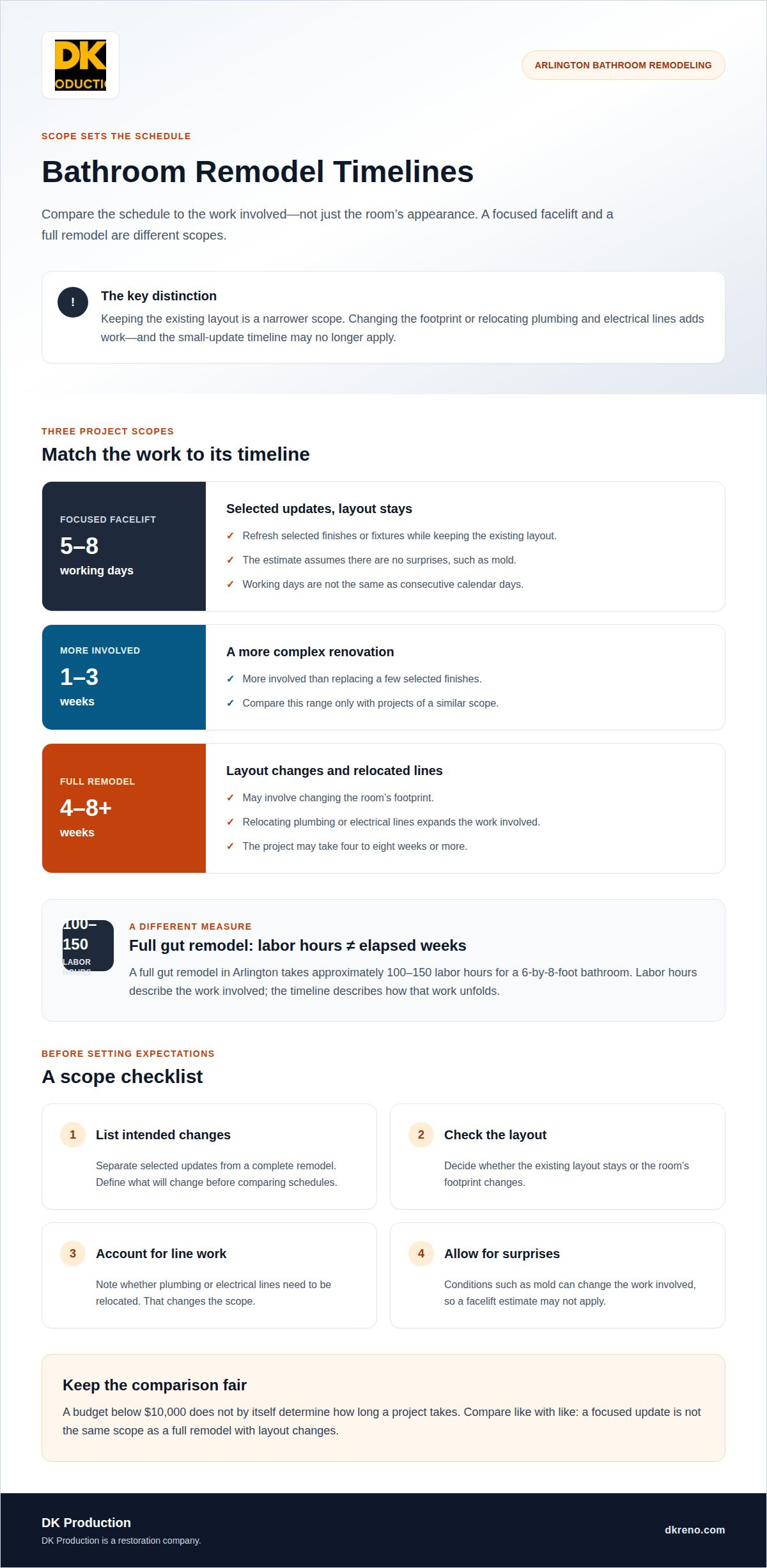
A bathroom remodel’s timeline in Arlington depends more on scope than appearance. A focused facelift may take five to eight working days when there are no surprises, such as mold. A more complex renovation may take one to three weeks. A full remodel involving layout changes and relocated plumbing or electrical lines may take four to eight weeks or more.
Those ranges describe different projects, not competing estimates for identical work. Replacing selected finishes while keeping the existing layout is a narrower scope than changing the room’s footprint. A facelift without mold, for example, differs substantially from a remodel that moves plumbing lines. The work involved determines which timeline is a useful comparison.
For a small update, five to eight working days offers a practical frame for planning around disruption. “Working days” does not mean the same number of consecutive calendar days. The estimate also assumes no surprises, such as mold. If the scope expands after work begins, the original schedule may no longer apply.
A more complex renovation may take one to three weeks, while a full bathroom remodel in Arlington may take four to eight weeks. If the remodel changes the footprint and relocates electrical wiring and plumbing lines, it can take four to eight weeks or more. That broader scope involves more than refreshing finishes, so comparing it with a straightforward facelift can create unrealistic expectations.
Labor hours offer another way to understand a full gut remodel, but they aren’t interchangeable with elapsed weeks. A full gut remodel in Arlington takes approximately 100-150 labor hours for a 6-by-8-foot bathroom. Labor hours describe the work involved; the project timeline describes how that work unfolds. Treating 100-150 hours as a guaranteed calendar duration would confuse two different measures.
Before setting expectations, define the project in sequence: identify the intended changes, decide whether the layout will stay, and account for any plumbing or electrical work. Then compare the planned scope with the relevant timeline: five to eight working days for a small facelift, one to three weeks for more complex work, or four to eight weeks or more for a full remodel with major changes.
A budget below $10,000 doesn’t, by itself, determine how long a bathroom project takes. The important distinction is whether the plan is a focused update or includes broader changes. A clearly defined scope makes it easier to discuss timing, especially when the existing layout remains unchanged. Mold or relocated plumbing and electrical lines can change the work involved, so the facelift estimate shouldn’t be applied to those conditions.
Customer reviews of Arlington remodelers
Customer reviews can help you picture a bathroom project before work begins. Look for specific details: what changed, what stayed, how communication worked, and what the finished room looked like. For an Arlington homeowner planning a focused update, a review about a complete gut remodel may describe a very different experience. Read the project scope before using someone else’s timeline or satisfaction as a guide for your own job.
Look for the work described, not just the reviewer’s overall rating. “Updated the vanity and flooring” tells a different story from “changed the bathroom layout.” A review that names the room’s original condition, chosen finishes, and completed work offers more context. A comment about replacing a fixture without changing the layout, for example, is more relevant to a limited refresh than one about rebuilding the room.
Communication is another useful theme. Reviews may describe how changes were explained, questions were handled, or the work area was managed. Those details add context to a short rating. If a reviewer mentions an unexpected condition, such as concealed water damage, note how it affected the scope. A review shows how one project unfolded, but it cannot establish that every bathroom will follow the same path.
Timeline comments need the same context. One bathroom remodeling review describes a complete bathroom and kitchen job that took 2 1/2 weeks. That example combines two rooms, so it isn’t a direct schedule for a single bathroom. Check whether a timeline refers to working days or elapsed time, and whether the review describes a facelift, a larger renovation, or additional work.
For a budget-conscious remodel, reviews are especially useful when they describe trade-offs. A homeowner might explain choosing a simpler finish to keep a preferred fixture, or retaining the existing layout to avoid broader changes. These examples show how decisions shaped that project. They do not establish a standard price or prove that the same combination will suit another Arlington bathroom.
Use a simple reading sequence: identify the project scope, look for communication details, then note the completed work and any changes during the job. Treat repeated, concrete themes as context, not proof that every project will be identical. A detailed review can help you form clearer questions about your priorities and the result you want.
Reviews are snapshots, not complete project records. A short comment may omit the materials, original condition, or included work, while a detailed account gives a clearer picture of those choices. Praise for a polished finish, for example, says less about the process than a review explaining both the scope and the decisions behind it.
Factors that affect remodeling costs
In Arlington, a remodel under $10,000 generally calls for prioritizing a narrower set of updates than a midrange project. Labor and materials don’t have a fixed split; the balance depends on scope, selections, and existing plumbing or electrical conditions.
Budget and Midrange Cost Comparison
A limited budget usually means deciding what to change now and what to keep. Updating selected finishes while retaining the existing layout differs from redesigning the room and changing multiple fixtures. Compare the scope of the work, not just the label attached to a budget.
Midrange work may allow a broader mix of materials and updates, while a smaller project may call for simpler finishes or fewer replacements. List the bathroom’s priorities, such as the vanity, flooring, or shower area, then separate essential work from optional changes. That makes trade-offs clear before you make selections.
Labor and Material Costs
Labor and materials depend on the work involved. Keeping plumbing connections in place avoids the additional tasks associated with relocating them, while changing the layout can require more coordination. Material choices matter too: standard tile and a distinctive fixture create a different plan from premium finishes throughout the room.
There’s no dependable percentage split that applies to every Arlington bathroom. A professional estimate needs to reflect the selected materials, installation requirements, and existing conditions. Replacing a vanity without altering nearby plumbing, for instance, involves a different labor scope from moving the vanity.
Several decisions can change the amount of work, even if the room stays the same size. A new shower surface may require preparation and installation, while replacing a finish in an unaffected area involves different work. Marble tile also costs far more than standard subway tile, so using it for a focal area rather than throughout the room can shape material choices.
Existing conditions matter as much as visible selections. Mold can add work, and concealed water damage may change what needs attention once an area is opened. Plumbing and electrical changes also affect the scope. A plan based only on visible finishes can miss these conditions, so the assessment should connect proposed upgrades with the bathroom’s current state.
Use this sequence to organize decisions:
Choose the primary improvement, such as a refreshed shower or vanity.
Keep the existing layout if broader plumbing changes aren’t a priority.
Balance a standout fixture with simpler finishes elsewhere.
Set aside optional upgrades until essential work and materials are defined.
These choices help clarify what fits the intended scope before materials are selected. A bathroom remodeling plan can account for priorities, finish choices, and the work required by existing conditions.
Bathroom remodeling services in Arlington
Bathroom work in Arlington can range from a focused finish update to a room reconfiguration. The main factors are the existing condition, planned changes, selected materials, and whether plumbing or electrical systems will move. Defining these elements clarifies the scope and distinguishes surface improvements from work affecting essential systems.
For Arlington projects in Snohomish County, bathroom remodeling that involves plumbing or electrical changes requires permits. Permit costs in Snohomish County range from $500 to $2,000, depending on scope. Those requirements and fees matter when planning a layout change, relocating pipes, or altering electrical wiring, rather than assuming every project follows the same process.
Start by identifying the room’s needs. A homeowner might prioritize a worn shower area, storage, or an outdated vanity. Next, decide which existing features will stay and which changes involve plumbing or electrical work. That distinction clarifies the work before finish selections shape the design.
Material choices also influence the finished result. Standard tile paired with one distinctive fixture creates a different visual balance from premium finishes throughout the room. Retaining the existing layout can keep the plan focused, while moving plumbing or electrical systems adds coordination and permit considerations. The right scope connects visible improvements with the bathroom’s underlying condition.
Professional planning should account for more than the final appearance. The work sequence needs to reflect what is being replaced, what remains, and how system changes affect the project. If concealed water damage or mold appears, the condition may alter the required work. A clearly defined scope helps organize decisions as the project moves from assessment through installation.
Use these points to frame the project:
Identify the bathroom areas that need attention first.
Separate finish updates from plumbing or electrical changes.
Choose materials that support the priorities and overall design.
Include applicable permit costs when the scope changes plumbing or electrical systems.
A well-defined plan makes a budget-conscious remodel easier to evaluate. It also helps distinguish a selective refresh from a broader transformation, so material choices and system work are considered together. For a bathroom project with several connected updates, plan your bathroom remodeling project around the room’s condition, desired changes, and permit needs.
DK Production Restoration: Bathroom Remodeling
DK Production provides bathroom remodeling for homeowners planning a focused update or broader room transformation. If water damage affects the bathroom, DK Production also provides water mitigation, restoration, and reconstruction to help return the space to use. For a remodel without damage, define the desired changes, existing conditions, and priorities so the project scope reflects your home and goals.
Share which features you want to update and whether water damage or other property issues are part of the project. That context helps shape a clear path from assessment to finished space. Contact DK Production Restoration to discuss your bathroom remodeling needs.
Shape the Bathroom Around Your Priorities
Your next step is to turn the ideas from this guide into a clear project brief. Identify what you want the room to do better, which features matter most, and what you’d prefer to preserve. For an Arlington bathroom remodel under $10,000, those priorities help focus planning on the changes that matter to you, rather than spreading the project across too many competing upgrades.
It also helps to describe any known property damage or concerns about the bathroom’s condition. That context can shape the conversation about how remodeling and restoration needs fit together. DK Production Restoration can discuss the project scope and the right next step for your home.
Contact DK Production Restoration to talk through your bathroom project. A clear starting point can help you move toward a space that feels more useful and better suited to daily life.
Frequently Asked Questions
Can I mix high-end fixtures with mid-range materials to save money in my Arlington bathroom?
Yes. Make one fixture the focal point, then choose simpler finishes to complement the surrounding surfaces. A distinctive faucet, for example, can pair with straightforward tile and a practical vanity. Decide which feature matters most visually or functionally, then choose other elements to support it. This keeps the design intentional, prevents every element from competing for attention, and aligns choices with your priorities.
Do I need a general contractor for a bathroom remodel?
Not every bathroom project requires the same coordination. A focused update involving a few finish changes differs from a project combining plumbing, electrical, tile, and fixture work. A general contractor can coordinate the different parts of a larger scope and keep decisions connected. For a smaller project, consider whether several trades or system changes require organized scheduling and oversight.
How does a professional plan a bathroom remodeling project, and what information should Arlington homeowners provide?
A professional starts by assessing the bathroom’s current condition and understanding the changes you want, then shapes the scope around your priorities. Share which fixtures should stay or change, any known leaks or water damage, and your preferred finishes. For example, explain whether you want to keep the tub or change the shower area. These details connect design choices with the work the room needs.
How much should I budget for unexpected costs in an Arlington bathroom remodel?
Plan an additional 10-20% for unexpected bathroom remodeling costs in Arlington. This reserve can help accommodate newly discovered conditions, such as concealed damage that becomes visible during the work. Keep it separate from planned selections, so a change in the bathroom’s condition doesn’t immediately force a choice between essential work and finishes. The actual need depends on what the project reveals, so treat the reserve as a planning buffer.
Is it worth upgrading to a walk-in shower in my Arlington bathroom, or is a tub fine?
Choose based on how your household uses the bathroom, not appearance alone. A walk-in shower may suit routines centered on showering, while keeping a tub makes sense if bathing matters to your household. Consider how each option fits the room’s layout and your other priorities. The better choice supports daily use without forcing unrelated changes to the project.
Should I replace my Arlington bathroom’s plumbing before remodeling, even if it ‘works fine’?
Not automatically. If the remodel keeps fixtures in place and there are no known plumbing concerns, replacement may not be part of the scope. However, visible leaks, recurring problems, or planned plumbing changes deserve attention during project planning. Share what you’ve noticed and which fixtures you want moved or replaced. That helps the professional assess how plumbing conditions and layout affect the work.
Comments