
Arlington Contractor for Insurance Work and Repair Costs

One contractor can coordinate several trades during an insurance-related repair. An Arlington contractor for insurance work can organize the reconstruction scope and trade coordination, while the insurer determines coverage under the policy.
When repairs affect several parts of your home, a clear plan can make the process easier to follow. An Arlington contractor for insurance work can help distinguish temporary mitigation from permanent reconstruction and owner-requested upgrades, so each part of the project is easier to track.
This guide explains how an Arlington contractor for insurance work fits alongside insurer decisions, what documentation can support a repair scope, and how to distinguish covered repairs from separate upgrades. It also explains how restoration and reconstruction can help move a damaged home toward a well-planned repair.
Table of Contents
Temporary mitigation versus permanent reconstruction
Homeowners insurance may cover emergency mitigation and restoration in Arlington, but coverage depends on the policy and the insurer’s claim decision. Temporary measures to limit further damage are separate from permanent reconstruction, owner upgrades, and the insurer’s coverage determination.
Keeping these categories separate clarifies which work addresses immediate property damage and which restores finished rooms. It also gives homeowners and contractors a clearer basis for discussing the repair scope, documentation, and compensation.
Temporary Damage Mitigation
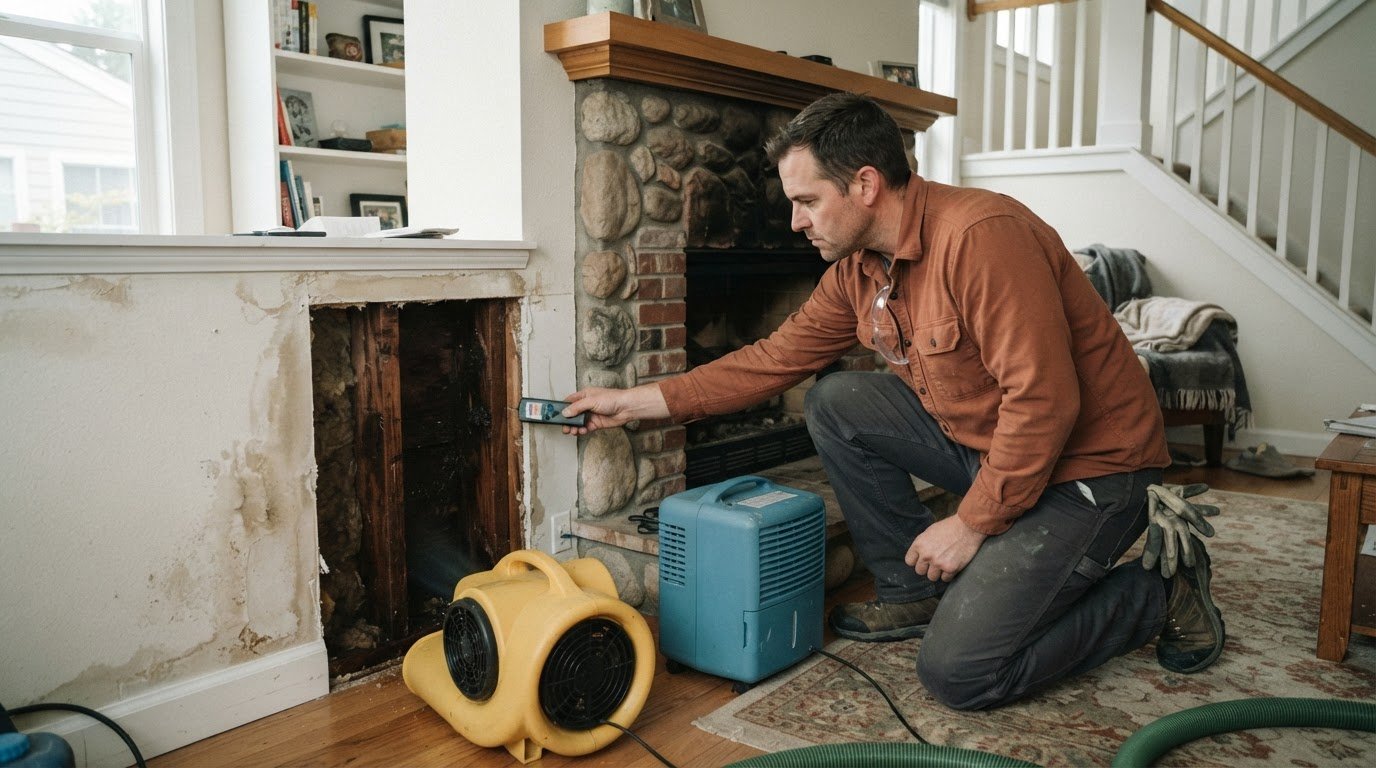
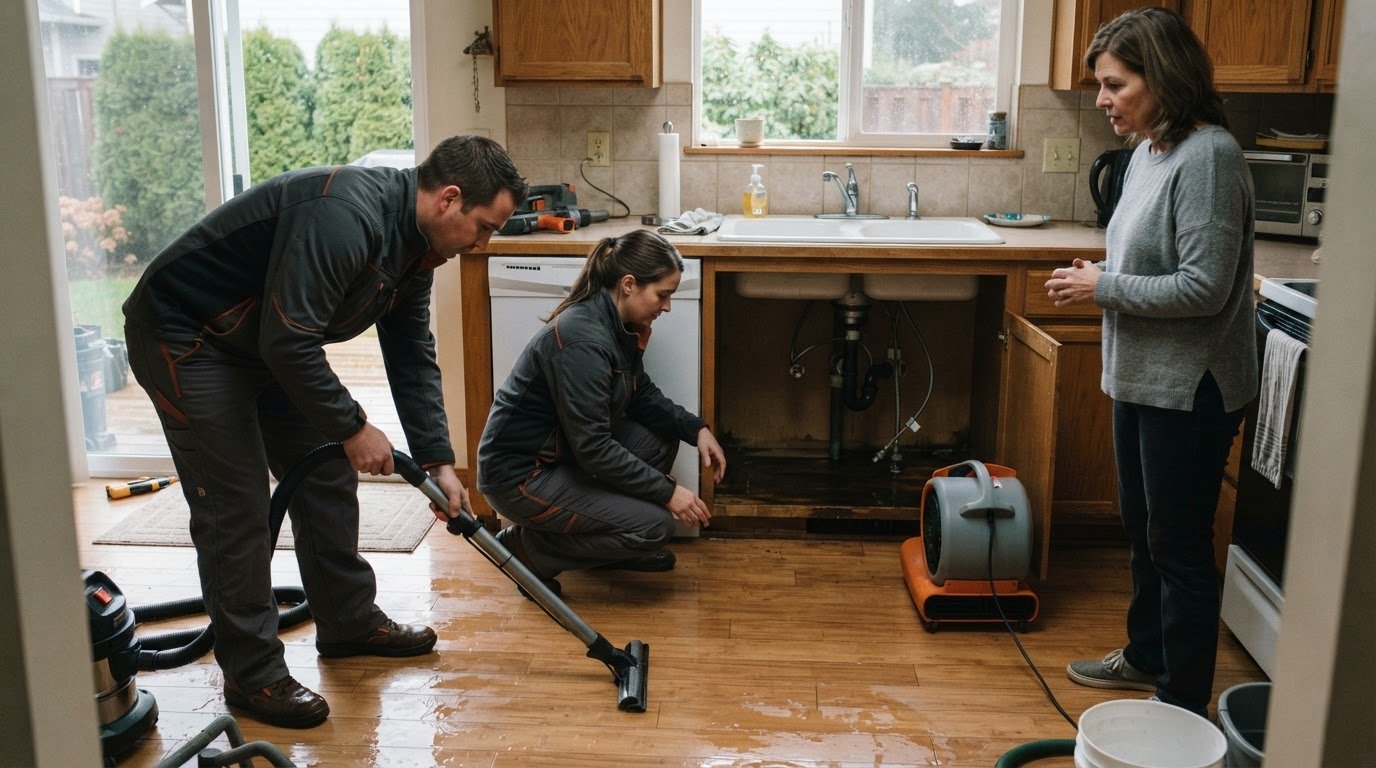
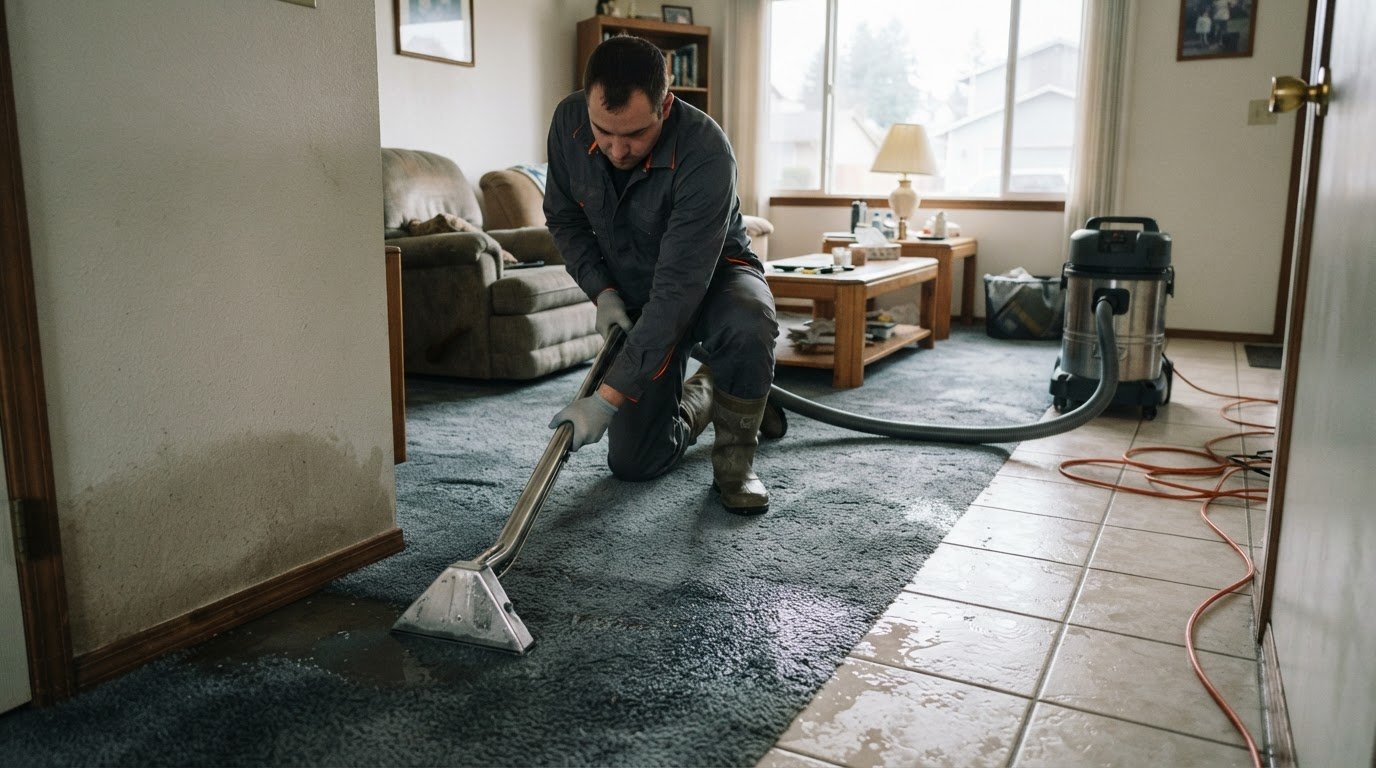
Temporary mitigation stabilizes a damaged property before permanent repairs begin. After water damage, this may involve stopping the water source, protecting exposed areas, and documenting moisture in affected materials. The goal is to limit further damage, not complete the final rebuild.
For moisture records, note the material, location, instrument mode, and comparison readings. Keep invoices and written scopes for temporary protection separate from permanent repair documents. This helps show which work stabilized the property and which work reconstructs it.
Steps Before Repairs Begin
After damage occurs, address immediate safety concerns and prevent further exposure where it is safe to do so. Photograph affected rooms and materials before conditions change, then contact the insurer to begin the claim process. Keep dated images, communications, and mitigation records together.
Before permanent repairs begin, establish the written scope and separate covered repairs from owner-requested upgrades. For example, replacing damaged flooring belongs in the repair discussion, while choosing a different finish may be an upgrade. Record the distinction so the estimate and claim documents describe the same work.
Permanent reconstruction can begin once the damaged areas and repair boundaries are understood. A written scope should identify selected products, work boundaries, trade coordination, and approval steps for changes. If several trades are involved, sequence their work to avoid gaps between removal, repairs, and finishing.
For an occupied Arlington home, the plan should also explain protected routes, room access, material storage, who moves belongings, and how the work area will be separated. These details help residents understand how work will proceed while the home remains in use.
Keep the insurance claim separate from a contractor’s business coverage. General liability insurance addresses certain third-party injury, property damage, and legal claims. Commercial auto and commercial property policies concern business vehicles and property. These policies are distinct from the homeowner’s policy decision about repairs. General liability insurance typically does not pay to correct the contractor’s own faulty workmanship.
Temporary mitigation and permanent reconstruction may involve connected work, but their scopes should remain identifiable. When the written repair scope changes, document the change and its approval before the affected work proceeds. This gives the homeowner, insurer, and job-site team a shared record without treating an owner upgrade as automatically covered.
Insurance repair documentation and construction estimates
A clear repair file connects observed damage to the proposed construction work. In Arlington, organize dated condition photos, room dimensions, material descriptions, and a written estimate together. For example, photos can show where a wall was damaged by water, while measurements help define the affected area. The estimate can then describe the proposed work for that specific area instead of relying on a general description of “repairs.”
Build the file in a practical sequence. First, record the affected room and visible conditions. Next, note dimensions and identify materials such as drywall, flooring, or trim. Then match each proposed task to the damage it addresses. If temporary protection or stabilization is included, keep its scope and invoices separate from permanent repair documents. This makes it easier to distinguish property protection from reconstruction.
Condition record: Use dated images and identify the room or surface shown.
Measurements: Connect dimensions to the affected area and estimate quantities.
Material details: Describe existing materials and selected replacement products.
Work scope: Identify boundaries, trade coordination, and approval steps for changes.
A written construction estimate should make each proposed task easy to understand. It can distinguish removal, preparation, installation, and finishing, then connect those activities to the affected rooms. For example, a flooring scope can identify the damaged area, removal work, replacement material, and transition to adjacent flooring. If the selected product changes, document the revised selection and approval before related work proceeds. Keep owner-requested upgrades separate from repairs submitted under the claim.
Insurance coverage and contractor business protection are separate matters. The homeowner’s policy and the insurer’s decision determine claim coverage; general liability insurance concerns certain third-party injury, property damage, and legal claims. Contractor tools and equipment coverage can address stolen, damaged, or lost items at a job site or in transit. Commercial auto concerns business vehicles, while umbrella liability may apply after underlying liability limits are reached. These policies do not establish what a homeowner’s repair claim covers.
Use the estimate to track scope changes, not to assume every requested item receives compensation. A revised room layout, upgraded finish, or added work area should be described separately from the original damage-related scope. For a broader renovation, whole-house remodeling may help frame owner-selected work as a distinct project decision.
Interior water-damage reconstruction
In Arlington, DK Production handles water damage restoration, including mitigation and reconstruction. Fire and smoke restoration and mold remediation address different conditions and require their own appropriate scopes.
Reconstruction starts by defining which interior materials need repair or replacement. A wet wall, for example, may involve gypsum panels, framing, fasteners, insulation, and finish layers. The repair scope should address the affected assembly, not just the visible surface. Focusing only on a damaged panel may leave concealed framing or connected finishes out of the plan.
Material selection matters. Moisture-resistant gypsum board is not waterproof and may not suit every wet location. For gypsum panels, match thickness, framing, fasteners, and assembly requirements to the selected panel. The choice affects more than appearance: the supporting structure and installation details need to work together as an assembly.
Plan reconstruction in a clear sequence. First, define the work boundaries and identify affected rooms. Next, coordinate removal and preparation with installation and finishing. Then specify the selected products and how the work will transition to adjacent surfaces. For example, replacing part of a wall may require a clear finish boundary at a corner or trim line so the repaired area meets the existing room cleanly.
Occupied homes need practical work arrangements alongside the construction scope. Identify protected routes, room access, material storage, who is responsible for moving belongings, and how the work area will be separated. These details help residents understand how crews and materials will move through the home while limiting disruption to unaffected rooms.
Insurance claims and contractor business insurance address different risks. An insurer evaluates the homeowner’s claim under the policy. General liability insurance concerns certain third-party injuries, property damage, and legal claims arising from business operations. It does not determine the homeowner’s coverage or automatically pay for rebuilding. Employees, job activities, and policy terms shape a contractor’s separate business protections.
Commercial auto insurance relates to vehicles used for business, while a premium is the policy’s cost. These matters concern contractor operations, not the repair scope inside a water-damaged home. Keeping the claim, construction plan, and business insurance distinct helps avoid confusing a contractor’s liability protection with compensation for household repairs.
Before reconstruction proceeds, the written scope should connect each planned task to the damaged interior and selected materials. Changes to products or work boundaries need clear approval steps, especially if new choices extend beyond restoring the damaged area. This keeps decisions organized from preparation through the finished surface.
DK Production coordinates water damage mitigation and interior reconstruction in Arlington. Fire and smoke restoration and mold remediation address those specific types of damage.
Which Arlington location does the user mean: Arlington, Virginia, Texas, or another city?
This guide refers to Arlington, Washington, in the United States. Arlington, Virginia, and Arlington, Texas, are different locations, so the city name alone can lead readers to the wrong repair information.
Start with the damaged property’s full address, including state and ZIP code. Use that location consistently in claim communications, repair documents, and contractor discussions. For example, a homeowner in Arlington, Washington, should not rely on an estimate or location-specific advice prepared for a property in Arlington, Texas.
The property address also helps tie the claim to the correct home. Match the address on insurer correspondence with the damaged property and repair documents. If a form or email refers only to “Arlington,” clarify the state before treating it as the relevant claim record.
Use these steps to keep location details clear:
Write the complete property address, including Arlington and Washington.
Use that same address in claim correspondence and repair records.
Identify the actual property location when discussing damage or proposed work.
Separate information about another Arlington from documents for your home.
Location matters because an insurance decision concerns a specific insured property and its policy. A carrier’s decision about a home in Arlington, Washington, does not establish coverage for a similarly named city elsewhere. Keep the property address with claim notes and repair discussions so the location stays clear as the file develops.
Be precise when discussing contractor experience or project coordination. A reference to work in Arlington, Texas, does not by itself describe a project in Arlington, Washington. Connect any example to the property’s actual state and type of work. This keeps descriptions useful without implying that different locations share the same conditions or repair requirements.
Apply the same care when comparing estimates, correspondence, and photographs. Label records with the property address, room, and damage area; for example, identify a kitchen photo as belonging to the Arlington, Washington, home. If a document gives an incomplete city reference, clarify which property it concerns before adding it to the claim file. Consistent location records make it easier to track which estimate, decision, and repair scope belongs to the home.
For a repair discussion tied to the correct property, discuss your Arlington home project.
DK Production Restoration
DK Production helps Arlington homeowners move from property damage toward a clearly planned repair. When water damage needs immediate attention and lasting repairs, its water mitigation and reconstruction work can support the transition from stabilization to rebuilding.
For an insurance-related project, a defined repair scope helps distinguish restoration work from owner-selected changes. DK Production provides restoration, water mitigation, reconstruction, and water damage repair, while the homeowner’s policy and insurer determine claim coverage. This is a practical next step once damage is documented and you’re ready to discuss the work needed at your home.
Contact DK Production Restoration to discuss your restoration needs.
Move Forward With a Clear Repair Plan
Turn the documented damage into a practical plan to restore your home. Keep the repair scope focused on the affected property, and separate necessary restoration work from personal upgrades so each decision has a clear purpose.
DK Production provides restoration, water mitigation, and reconstruction. If you’re considering an Arlington contractor for insurance work, the team can address property damage and plan the work needed to restore your home. Your insurer determines coverage under your policy, while the repair plan guides the construction work.
Start a conversation with DK Production Restoration about your home and the repairs ahead. A clear next step can make the path from damage to recovery feel more manageable.
Frequently Asked Questions
Can one contractor coordinate several approved trades?
Yes, one contractor can coordinate several trades when the project scope and work sequence are clearly defined. For example, a water-damaged room might need demolition, wall repairs, and finish work scheduled in order. A shared schedule can help prevent one trade from blocking another. Confirm which tasks are included in the approved scope and how proposed changes will be communicated before work goes beyond it.
Can you work from an insurance company estimate?
Yes, an insurance company estimate can be a starting point for planning repairs. Compare the listed work with the property’s condition and the construction tasks needed to complete the repair. If opening a wall reveals additional damage, document the new condition and related work separately. The estimate guides the discussion, while the insurer makes coverage decisions under the policy.
Do you provide insurance claims in Arlington?
DK Production is a restoration company, not an insurer, and does not issue or approve claims. It provides restoration work and bills insurance companies directly on the homeowner’s behalf. Its local service area includes Arlington, Mukilteo, Marysville, Lake Stevens, Snohomish, Lynnwood, Mill Creek, Mountlake Terrace, Brier, Edmonds, Woodway, Stanwood, Monroe, Granite Falls, Sultan, Gold Bar, Darrington, Index, and Bothel.
Do Arlington contractors work directly with insurance adjusters and provide claim documentation?
Practices vary by contractor. DK Production Restoration bills insurance companies directly on the homeowner’s behalf, but billing is distinct from an insurer’s claim review or approval. For a clear project record, keep the contractor’s repair documents with insurer correspondence, and note which property areas each document addresses. This helps distinguish construction planning from the carrier’s coverage decision.
How do Arlington contractors' estimates compare with insurance adjuster estimates?
Estimates may differ because they describe different work assumptions, quantities, or repair methods. Compare tasks and affected areas line by line rather than judging only the totals. For example, one estimate may describe a surface repair while another includes connected finish work. Identify the specific difference and clarify whether it concerns observed damage, proposed construction, or a separate owner choice.
What should homeowners check before hiring a contractor for insurance repairs in Arlington?
Check that the written scope identifies selected products, work boundaries, trade coordination, and approval steps for changes. Keep temporary mitigation, permanent repairs, owner-requested upgrades, and insurer decisions distinct. Gather dated photos, room dimensions, material descriptions, and a written estimate.
Comments