
Emergency Water Mitigation in Arlington, WA for Flood Cleanup

Flood cleanup involves more than removing visible water. Emergency water mitigation in Arlington, WA, starts with identifying the water source and addressing moisture throughout affected areas, because what remains behind can be just as important as what you see.
After a flood, it can be hard to know what to clean, what may need removal, and how repairs fit into recovery. Mitigation typically includes assessing damage, extracting water, drying affected areas, and determining the cleanup and restoration work required.
This article explains how professionals manage flood damage, from extraction and drying to mold remediation and repairs. DK Production Restoration provides water damage mitigation, restoration, and reconstruction for homes in Arlington, WA. Learn what the process involves and how professional services can help restore your home.
Table of Contents
Water Emergency in Arlington?
During a flood, move people and pets away from rising water, then arrange professional help. Emergency water mitigation in Arlington, WA, starts with a prompt assessment of the water source, affected areas, and access conditions.
Local Emergency Response Availability
Arlington’s heaviest rain season runs from November through February, with another possible rise in water damage calls in March. The North Fork Stillaguamish River is a key local flood source, while Portage Creek affects the city’s east side. Those conditions can increase demand for emergency flood response near Arlington.
Arrival timing depends on crew location, road access, active calls, and the source of the water. For emergency water mitigation in Arlington, WA, ask when a crew can reach your address and what its first assessment covers. A clear estimate helps you plan while water threatens flooring or a crawl space.
Around-the-Clock Water Removal
Water can spread through flooring, wall cavities, and crawl spaces while a leak or flood remains active. A 24/7 emergency response line can connect you with help outside regular business hours. Ask whether the first visit includes water removal and an assessment of areas where moisture may have traveled beyond what’s visible.
During flooding, move household members and pets to a safe, dry area. Turn off electricity only if you can do so without stepping in water. Sandbags can slow and redirect slow-moving floodwater up to two feet deep, but they won’t stop it completely. These precautions don’t replace professional water damage restoration.
Choosing a Washington Mitigation Contractor
When choosing a licensed water mitigation contractor in Washington, ask the company to explain the registration or license relevant to its work. Request a written scope that separates water removal, drying, and repairs, so you can understand what each phase covers.
Washington contractor licensing rules can depend on the work being performed. Ask how the contractor’s credentials apply to mitigation and reconstruction, and request documentation of the planned work. A clear explanation helps you distinguish professional qualifications from general claims of experience.
Questions to Ask Before Hiring
Ask, “When can a crew reach my Arlington address, and what happens during the first visit?” Then ask, “Will you assess the water source and affected flooring, walls, and crawl space?” Answers can clarify response timing and whether the assessment considers both visible water and affected areas.
Also ask how the team will explain the drying process and document the work, and which repairs are included in the scope. Once flooding stops and it is safe, photographs can help record damage. Clear information about assessment, extraction, drying, and repairs makes the recovery plan easier to follow.
How do professionals clean up flood damage in a home?
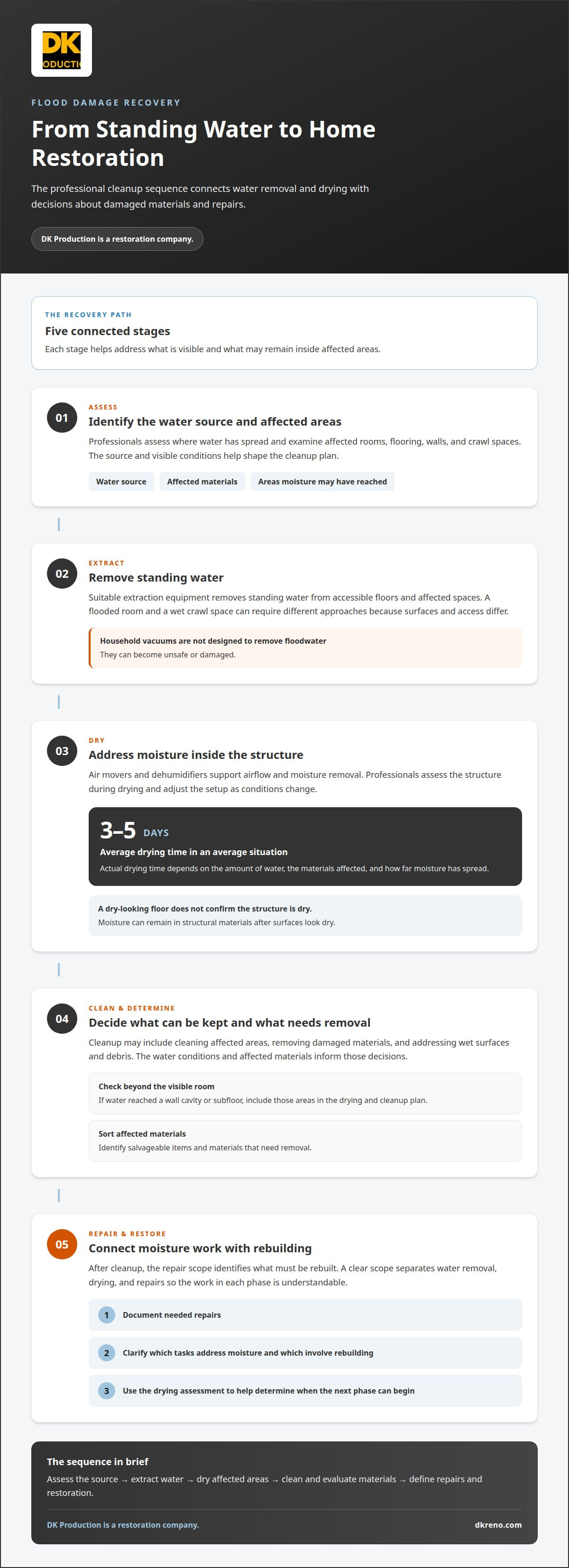
Professional emergency water removal and drying begin with assessing the affected rooms and extracting standing water. The team then dries the structure, cleans affected areas, and identifies materials that need repair or rebuilding.
Emergency Water Extraction
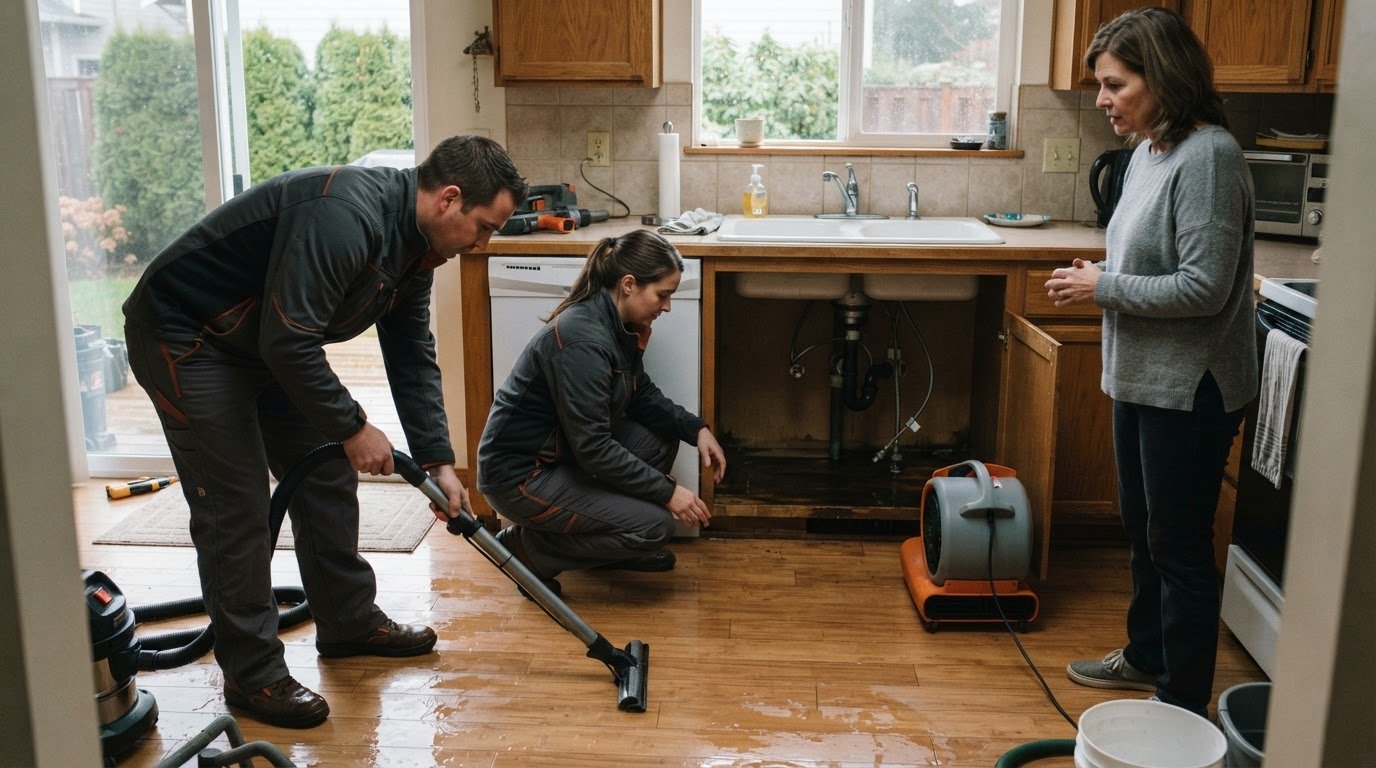
Water extraction removes standing water from accessible floors and affected spaces. Professionals assess where the water has spread before choosing an extraction approach, since a flooded room and a wet crawl space have different surfaces and access points. The water source and visible conditions also shape the cleanup plan.
Household vacuums aren’t designed to remove floodwater and can become unsafe or damaged. Professional cleanup starts with suitable extraction equipment, followed by an assessment of wet flooring, walls, and other affected areas. After a major storm, the work may involve more than the water visible on the surface.
Structural Drying Systems
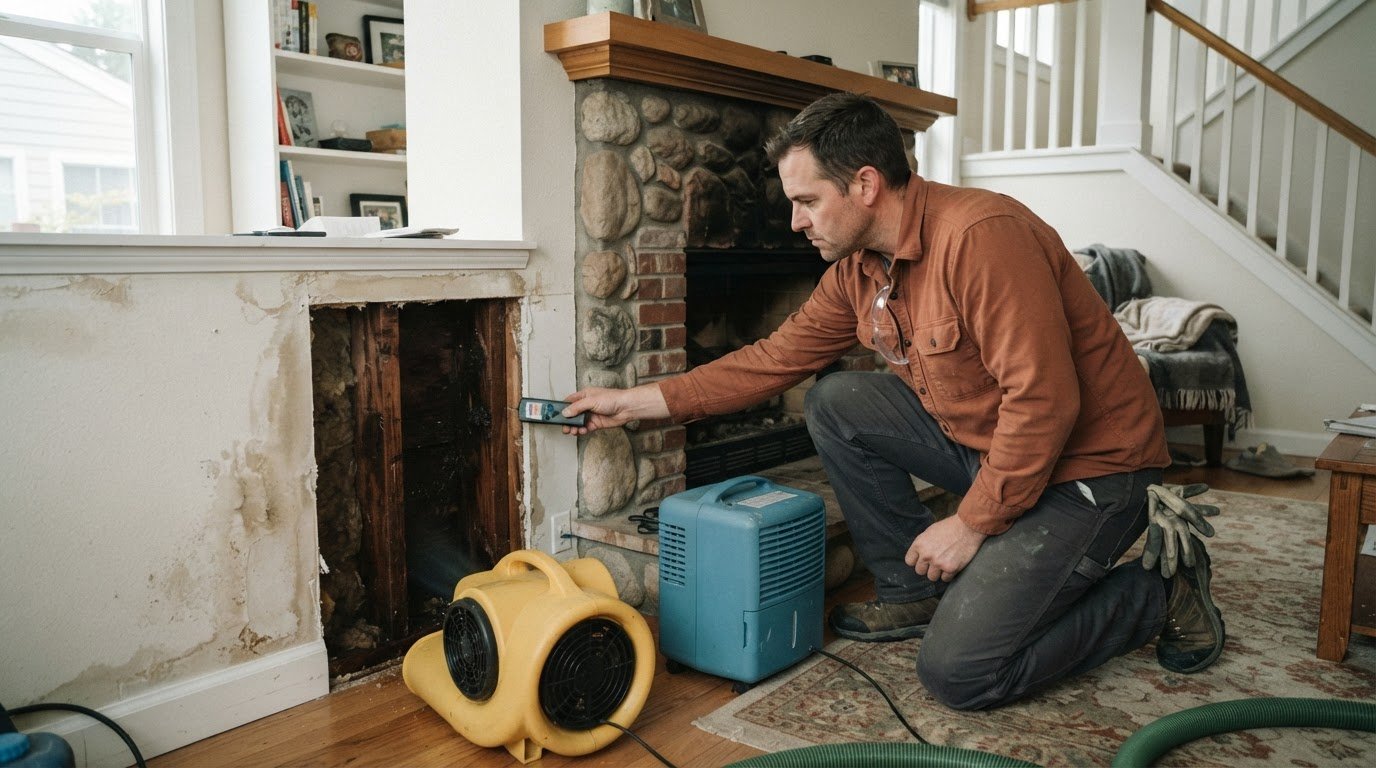
Removing standing water is only one part of recovery. Moisture can remain in structural materials after floors look dry, so professionals assess affected areas and use drying equipment to address lingering dampness. Industrial drying systems may include air movers and dehumidifiers, positioned to support airflow and moisture removal.
Drying time depends on the amount of water, materials affected, and how far moisture has spread. In an average situation, drying a water-damaged structure takes 3-5 days. A professional evaluates the structure during drying and adjusts the setup as conditions change, rather than relying on surface appearance alone.
Professional Post-Flood Drying and Cleanup
After extraction, professionals coordinate drying and cleanup based on the affected materials and water conditions. They identify salvageable items and materials that need removal, then address wet surfaces and debris. If water reached a wall cavity or subfloor, those areas need attention in the drying plan, not just the visible room.
Cleanup also prepares the home for restoration. Work may include cleaning affected areas, removing damaged materials, and documenting needed repairs. A clear scope explains which tasks address moisture and which involve rebuilding. This helps homeowners see how extraction, drying, and repairs fit together as distinct steps.
For a home with water damage, a professional restoration process connects cleanup with the work needed to return affected areas to use. The drying assessment helps determine when the next phase can begin, while the repair scope identifies what must be rebuilt. This coordinated sequence keeps the focus on both immediate moisture and lasting damage.
Flooding from storms, groundwater, burst pipes, appliances, and sewage backups
Flood damage in Arlington can start outdoors or inside a home. Identifying the source helps professionals assess contamination, affected materials, and the structural repairs needed.
Common Flooding Sources
Storms can bring river or surface flooding, while groundwater can enter through foundation cracks. Inside, burst pipes, aging fixtures, failing appliances, and sewage backups can cause water damage. The source matters because water from different events may carry different contaminants and require different cleanup decisions.
Noting where water first appeared can help describe the event during an assessment. A failed appliance may affect one room, while a sewage backup can spread contaminated water across flooring and lower surfaces. Professionals use the source and water pathway to define affected areas and plan removal, cleaning, and repairs.
Insurance coverage depends on the cause and the individual policy. Groundwater flooding is usually covered by flood insurance rather than a standard homeowners policy, which generally does not cover flood damage. Once it’s safe, photograph the damage to help document conditions for an insurance claim.
River Flooding and Saturated Ground
The North Fork Stillaguamish River is Arlington’s main source of flood-related water damage after heavy Pacific Northwest rain. Portage Creek is another flood source on Arlington’s east side. These waterways create different local exposure patterns, so a property’s location and the route water takes indoors matter during damage assessment.
Flooding can also affect a home before a river leaves its banks. Near Haller Park, hydrostatic pressure can push water through foundation cracks, especially when surrounding ground is saturated. Professionals assess both visible water and damp structural areas, including basements and crawl spaces, to determine how far moisture has traveled.
Arlington can see another rise in water damage calls in March, when warm rain combines with remaining mountain snowpack upstream. That combination can add water to already saturated ground. The resulting conditions may bring water through low openings or foundation cracks, making the entry point and affected materials important parts of the cleanup assessment.
Contaminated Floodwater and Material Removal
Natural floodwater is classified as category 3 water damage. Floodwater can carry bacteria and other contaminants that may harm health, so professionals treat its source as a key factor in cleanup planning. The water’s path through a home also helps identify which surfaces and materials may have been exposed.
Porous materials touched by river floodwater, including drywall, insulation, and carpet, generally have to be removed. Their absorbent structure can make effective cleaning difficult after exposure. Professionals assess affected materials and include necessary removal in the cleanup scope before structural repairs begin.
Category 3 exposure changes the response from drying alone to managing contamination and affected materials. The assessment connects the source, spread, and material type, helping distinguish areas that need removal from surfaces that can be cleaned. Clear documentation can also help homeowners explain the damage to their insurance carrier.
Mitigation, mold remediation, and repairs
Delaying mitigation leaves moisture in building materials longer, increasing the risk of mold growth and continued damage to wet structural components. Professionals identify the water source, extract standing water, and assess what needs drying, mold remediation, or repair.
The sequence matters. If an appliance leak continues, drying alone won’t address the cause; the source must first be identified and stopped. With a sewage backup, the cleanup plan also needs to account for the water source and affected areas before restoration proceeds.
After water removal, professionals assess moisture beyond visible surfaces. Water can reach flooring, wall cavities, and other building materials, so a room that looks dry may still need attention. The assessment helps determine where drying should continue and whether affected materials can remain or need removal.
Mold remediation addresses mold associated with lingering moisture. The work begins by locating the moisture source and identifying affected areas, then containing and removing mold while addressing the conditions that support its growth. Treating visible mold without addressing its moisture source leaves an important part of the problem unresolved.
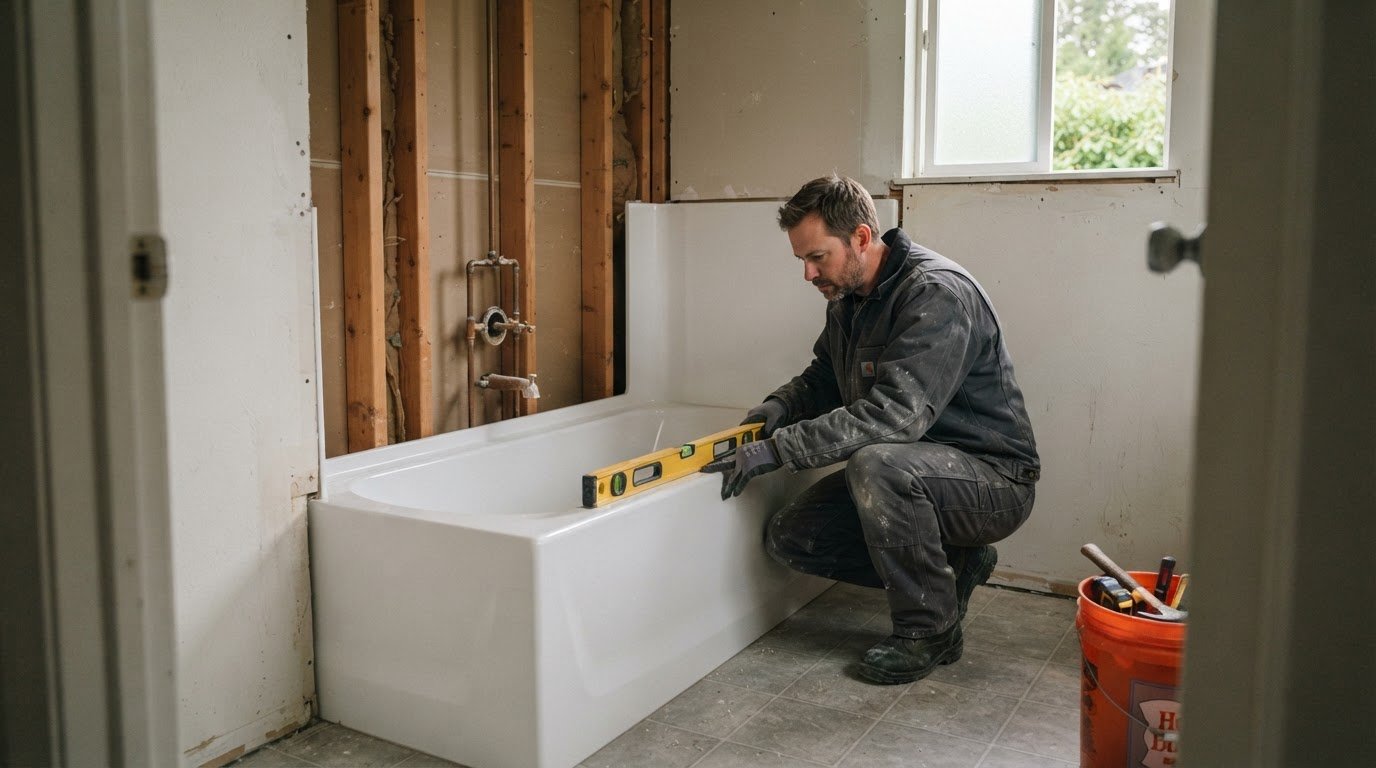
Repairs follow mitigation and cleanup when materials or structural components are damaged. A written scope can distinguish moisture-control work from reconstruction, such as replacing damaged flooring or repairing an affected wall. That separation helps homeowners understand each phase and how the home moves from cleanup toward restoration.
The work depends on the water source, affected materials, and how far moisture spread. An appliance leak confined to one area presents different repair needs than water that has entered several rooms. Professionals use these conditions to guide drying, remediation, and repair rather than treating every water-damaged home alike.
Mitigation: Locate the source and address water affecting the home.
Remediation: Remove mold and address moisture conditions related to its growth.
Repairs: Restore damaged materials after cleanup and drying work.
If water damage has left persistent moisture or visible mold, arrange professional water mitigation and restoration to assess the affected areas and plan the next steps.
DK Production Restoration: Water mitigation
DK Production provides water mitigation, restoration, and reconstruction for residential water damage in Arlington and across the Seattle metropolitan area. Call when flooding, a burst pipe, sewage backup, or another water loss affects your home and you need professional help with cleanup and repairs.
Water mitigation addresses the immediate effects of water, while restoration and reconstruction cover the work needed to bring affected areas back into use. DK Production handles these connected stages, from the initial damage assessment through repairs.
If water has damaged your Arlington home, contact DK Production Restoration to discuss the next steps.
Move from damage to a clear recovery plan
After water damage, the next step is turning uncertainty into a clear plan for your home. A professional assessment clarifies what needs attention first, which repairs follow, and how restoration can proceed. For emergency water mitigation in Arlington, WA, call DK Production for a damage assessment and a practical explanation of the work.
DK Production provides water mitigation, restoration, and reconstruction for residential water damage. These services address different stages of recovery, from containing and removing water to repairing affected areas. The damage assessment helps determine the next steps for your home.
You don’t have to sort through the recovery process alone. Contact DK Production Restoration to discuss water damage to your home and take the next step toward restoring it.
Frequently Asked Questions
Is flood damage covered by insurance?
Flood damage is generally not covered by a standard homeowners policy; groundwater flooding is usually handled through flood insurance. Coverage depends on the policy and the event’s cause, so review terms and exclusions involving floodwater, sewer backups, and plumbing leaks. For a claim, report the loss to your insurer and keep a record of when the damage occurred, which rooms were affected, and the communications you receive.
What are the most common causes of home floods?
Common causes include heavy rain, river flooding, groundwater entering through foundations, burst pipes, appliance failures, and sewage backups. Early clues might include a leaking supply line beneath a sink, water pooling near a washing machine, or dampness around a basement wall after rain. Where water first appeared can help distinguish an indoor plumbing failure from water entering from outside.
Is 24/7 emergency water damage restoration available in Arlington, WA?
Yes. DK Production Restoration is a restoration company with a 24/7 line for water-damage emergencies. Its published service information says crews arrive within 60 minutes or less across the Seattle metro after dispatch, and Arlington is among its targeted communities. The process includes dispatching the closest crew, assessing damage, extracting water or securing affected areas, then completing repairs and reconstruction for residential property damage.
How should I assess water mitigation company reviews and response times near Arlington, WA?
Reviews can offer insight into communication during a stressful restoration project. DK Production testimonials describe professionalism, insurance handling, and repair quality, providing context beyond a response-time claim. For an Arlington water loss, look for specific comments about how the team explained the work, documented affected areas, and coordinated the transition from mitigation to repairs. Use testimonials as context alongside a clear explanation of the proposed work.
Does homeowners insurance cover water damage mitigation in Washington state?
It depends on the water source and the policy. A sudden plumbing leak and groundwater flooding may be treated differently, and a typical homeowners policy generally doesn’t cover flood damage. Review your policy’s definitions, exclusions, and any separate flood coverage to understand how mitigation may be handled. Your insurer can explain how the specific event fits the policy and what documentation is needed for a claim.
Where can I find local flood and water damage resources in Arlington and Snohomish County?
For local public updates during flooding, use official information from the City of Arlington and Snohomish County, including notices about safety and local access. Your insurer is the relevant contact for policy and claim questions. Once conditions are safe, keep photos and a written timeline of the damage; sharing those details with your claims contact and restoration team can help organize the next steps.
Comments