
Getting Multiple Quotes for Remodeling to Check Price Fairness

The lowest remodeling quote isn’t automatically the fairest. Getting multiple quotes for remodeling helps you compare options when each contractor prices the same scope, materials, and finish level. The total alone can’t show whether the proposals cover equivalent work.
It makes sense to want a clear number before committing, especially when a renovation affects your home and daily routine. A lower quote may leave out details another includes, while a higher proposal may reflect different materials, preparation, or project terms. Fairness comes from understanding those differences, not simply averaging totals or choosing the smallest figure.
This guide explains how to compare quotes on an apples-to-apples basis, choose how many contractors to approach, and review completion terms and warranties. You’ll also learn what to check in the scope, materials, schedule, and change process so you can spot gaps, understand what each proposal covers, and make a considered choice for your home.
Table of Contents
1. How Can You Tell If Your Remodel Quote Price Is Fair?
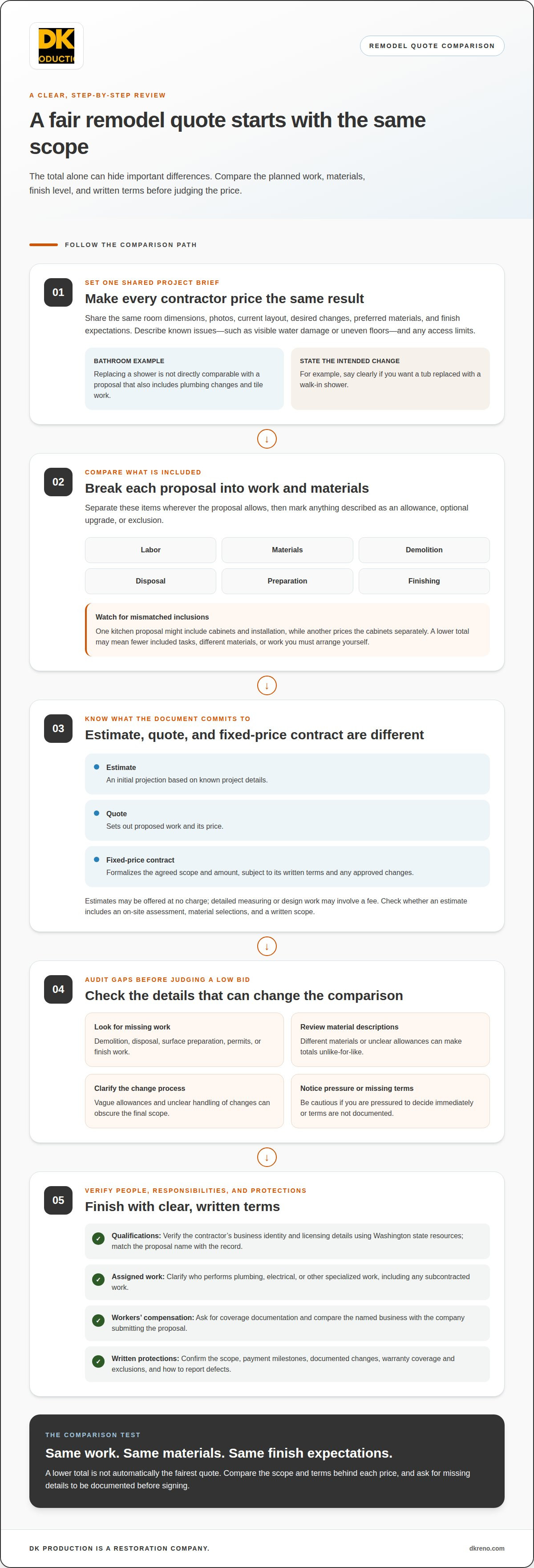
A fair quote makes the planned work clear, not just the total. Compare proposals for the same rooms, layout, materials, finish level, and preparation. In Snohomish, a bathroom quote for replacing a shower isn’t directly comparable to one that also includes plumbing changes and tile work. Before comparing totals, check that each contractor priced the same result.
Separate labor, materials, demolition, disposal, preparation, and finishing wherever the proposal allows. Mark anything described as an allowance, optional upgrade, or exclusion. For example, one kitchen proposal might include cabinets and installation, while another prices the cabinets separately. A lower total may mean fewer included tasks, different materials, or work you must arrange yourself.
An estimate is an initial projection based on known project details; a quote sets out proposed work and its price. A fixed-price contract formalizes the agreed scope and amount, subject to its written terms and any approved changes. Compare what each document commits to instead of treating these labels as interchangeable.
Estimates may be offered at no charge, while detailed measuring or design work may involve a fee. Any fee depends on the scope, site conditions, and level of detail required, and is provided after a quote request. For a useful comparison, identify whether the estimate includes an on-site assessment, material selections, and a written scope.
Give each contractor the same project information: room dimensions, photos, current layout, desired changes, preferred materials, and finish expectations. Describe known issues, such as visible water damage or uneven floors, and explain any access limits. If you want a tub replaced with a walk-in shower, state that clearly. Consistent details help ensure proposals price the same project.
There’s no universal turnaround for receiving multiple quotes. Timing depends on project complexity, how quickly you provide selections, whether site visits are needed, and each contractor’s workload. A defined scope and organized photos can reduce clarification requests, while custom materials or hidden conditions may require further assessment.
Review an unusually low bid line by line before treating it as a bargain. Look for missing demolition, disposal, surface preparation, permits, or finish work, and compare material descriptions. Vague allowances and an unclear change process can make the final scope difficult to understand. Be cautious if a proposal pressures you to decide immediately or avoids documenting terms.
Protect your decision with a written scope, clear payment milestones, and documented changes. Confirm the contractor’s business identity and check whether the proposal explains warranty coverage, exclusions, and how to report defects. If an important task or material is missing, ask for it to be addressed in writing before signing. Fairness rests on comparable work and transparent terms.
2. So, How Many Contractor Quotes Should You Get?
There’s no single number of quotes that suits every Snohomish remodel. Request enough proposals to compare contractors who understand the same scope and can explain their approach. A simple bathroom update may be easier to evaluate than a whole-house project involving several trades. The right number depends on complexity, remaining decisions, and whether each proposal gives you useful information.
Before comparing bids, verify each contractor’s business identity and licensing details using Washington state resources. Match the name on the proposal with the name in the record, and review the listed status and work classification. Note what you checked. For a project involving plumbing or electrical work, clarify who will perform each part and how those responsibilities appear in the proposal.
Look beyond a general claim that a contractor is licensed. Record the business name, license information, and work described in the bid. If a proposal assigns specialized work to another company, note that company’s identity too. This clarifies who is responsible for each part of your Snohomish project and makes the proposals easier to compare.
Workers’ compensation documentation is another practical item to review. Ask for documentation showing the contractor’s coverage, then compare the named business with the company submitting the proposal. If subcontractors are involved, note how their coverage is addressed. Keep the documents with your bid records so you can compare contractors using clear information, not just price or presentation.
Let unanswered project questions guide whether another proposal would help. A shower replacement may have a defined scope, while a kitchen remodel might involve unresolved layout or trade decisions. If proposals assume different plans, clarify the intended work first. Another estimate won’t create a useful comparison if it prices a different project.
A simple comparison sheet can keep your review organized. Include each business name, licensing details, workers’ compensation documentation, assigned trades, and unresolved questions. For example, note whether each kitchen proposal identifies who handles plumbing work. This brings differences in responsibility into view and helps you spot where a proposal needs clarification before you decide.
Stop requesting bids when the proposals cover the same scope and give you enough detail to assess qualifications, responsibilities, and approach. If a specific issue remains unclear, such as who performs specialized work, resolve it before deciding whether another perspective would add value. A focused comparison supports a more confident decision without collecting proposals that repeat the same assumptions.
3. Choosing how many quotes to request
Choose the number of proposals based on the decisions your remodel still requires. Getting multiple quotes for remodeling can clarify your options, but only when contractors respond to the same project goals. A powder room refresh may involve few design choices, while a whole-house renovation can span connected rooms and several work phases. Let the project’s complexity guide how much comparison will help.
First, write down the decisions that could change the scope. Are you keeping the kitchen layout or considering a new arrangement? Will a bathroom retain its existing fixtures or move them? If those choices are still open, decide which version you want priced before inviting more contractors. Otherwise, each proposal may describe a different remodel, making comparisons less useful.
Next, consider how much detail you need to assess the work sequence. A project affecting several rooms may require decisions about where work starts and how household routines will continue. Ask each candidate to explain how their proposed phases fit your priorities. Another bid can be valuable if it offers a distinct, practical approach to sequencing, not merely a different total.
Getting multiple quotes for remodeling is also more useful when each contractor has enough information to prepare a responsive proposal. Share the same project description, preferred products, and known constraints. For example, tell each candidate whether the household needs to keep one bathroom available during renovations. Consistent input helps distinguish genuine differences in approach from misunderstandings about your needs.
Use an inquiry stage before requesting detailed proposals. Briefly describe the work and ask whether the contractor’s experience aligns with the project type. For a whole-house remodel, you might explain that the work includes a kitchen, living area, and bedrooms. This initial conversation can help you focus detailed estimate requests on candidates whose approach fits the project.
Set a stopping point based on unresolved decisions. If proposals already address your scope and explain how the work would proceed, more quotes may repeat existing information. If a major question remains, such as whether to renovate rooms separately, seek another perspective focused on that question. This keeps your comparison focused instead of creating proposals based on conflicting assumptions.
Finally, weigh the effort of reviewing another bid against what it could teach you. A new proposal should add insight about design, sequencing, or project coordination. If it doesn’t address a decision that matters to your household, spend that time refining the written scope instead. The right number is the number that helps you understand the plan and choose confidently.
4. Comparing completion terms and warranties
A completion date matters, but so does the schedule behind it. Compare each proposal’s start conditions, work sequence, and estimated finish point. For a kitchen remodel, cabinet installation may depend on earlier demolition, preparation, and delivery. A schedule that identifies these stages gives you more useful detail than a finish date alone.
Check how each contractor describes delays and schedule changes. The proposal should explain how updates are communicated if a material arrives late or hidden damage changes the work. For example, ask whether the contractor will document a revised timeline after discovering damaged subflooring. Clear procedures help you understand how changes affect completion.
Compare payment milestones with the work they represent. One proposal might connect a payment to demolition, while another links it to completed installation. The schedule should identify each milestone clearly and explain what work it covers. Make sure the written terms match the project sequence, especially when several rooms or trades are involved.
Review the warranty language in each proposal rather than comparing warranty length alone. Look for the work covered, exclusions, start date, and process for reporting a concern. A bathroom proposal, for instance, might describe installation coverage separately from the manufacturer’s coverage for fixtures. Those are different terms, so record them separately.
Ask how workmanship concerns are handled after completion. The written terms should explain who receives the notice, what information to provide, and how the contractor responds. Note whether coverage applies to labor, materials, or both. If a proposal uses broad wording such as “workmanship warranty,” request a written description of its scope.
Check the closeout process before signing. A useful completion plan can identify the final walkthrough, remaining corrections, and delivery of product documents. For example, a whole-house remodel may need a room-by-room punch list. Compare whether each proposal explains how unfinished items are recorded and resolved before the project is considered complete.
Put differences side by side in a simple table, with rows for start conditions, schedule updates, payment milestones, warranty coverage, exclusions, and closeout steps. This makes a short schedule easy to distinguish from a detailed, workable plan. It also highlights terms that need clarification before you sign, without assuming similar wording means identical coverage.
For a remodel with multiple rooms or linked work stages, compare the full timeline and warranty documents together. That gives you a clearer view of how the contractor plans to manage the work from preparation through closeout. Discuss your remodeling project when you’re ready to review a project plan.
DK Production Restoration: Restoration
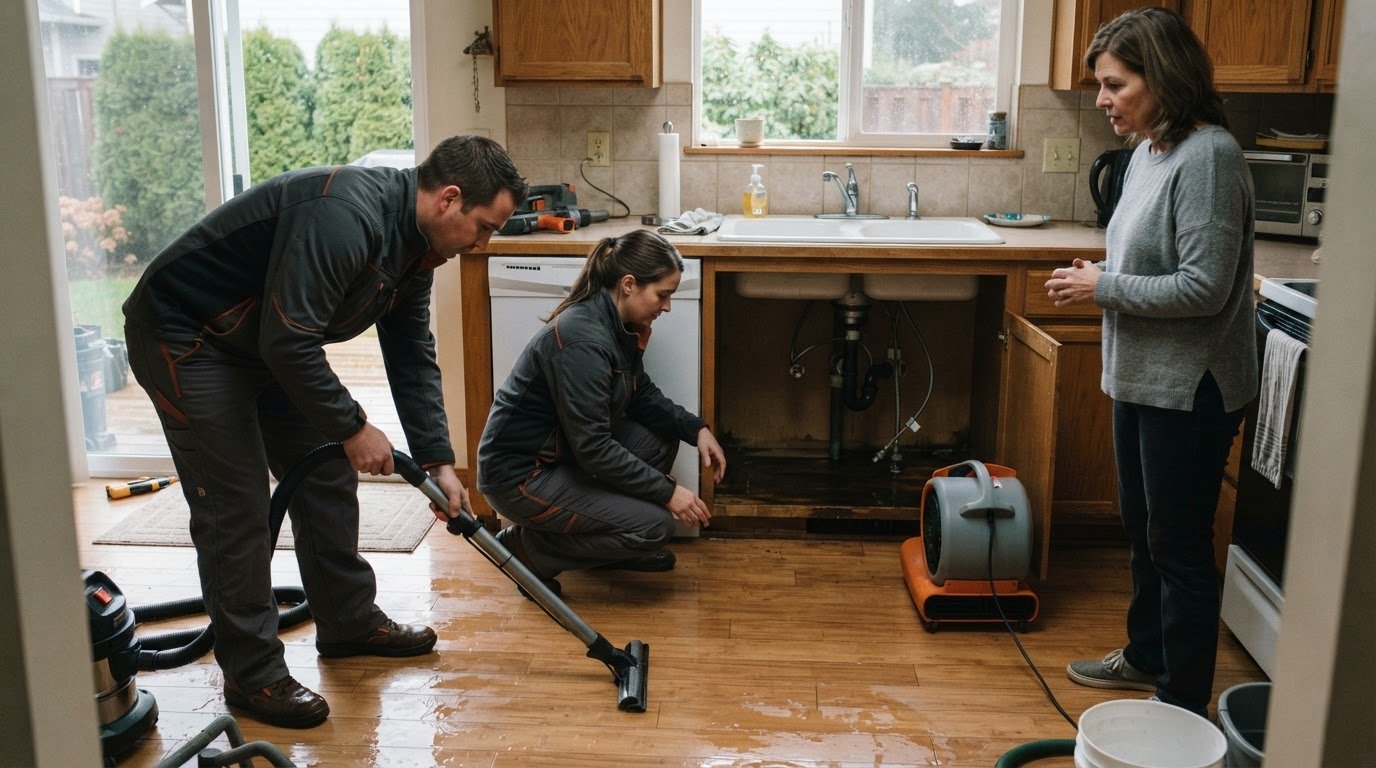
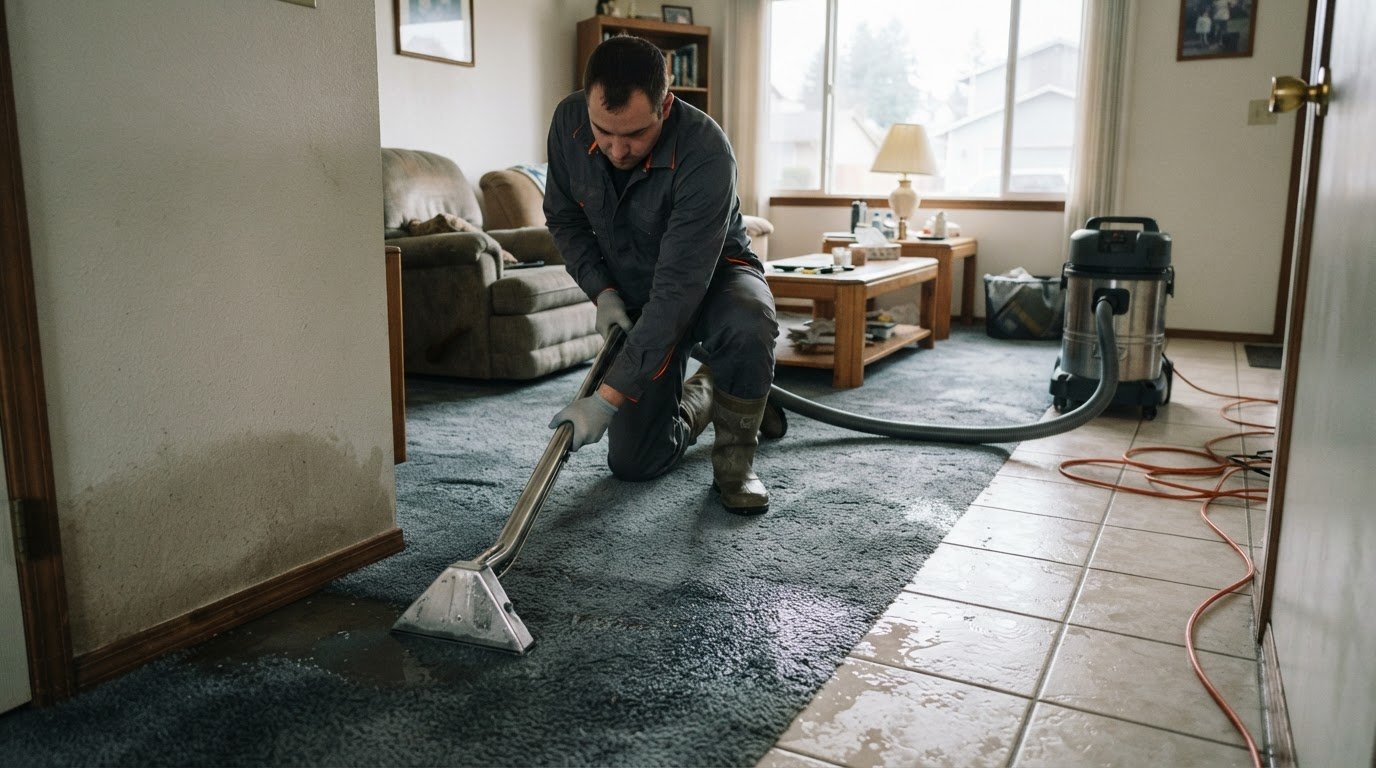
DK Production Restoration is a restoration company that helps homeowners address water damage and move from mitigation toward reconstruction. When water damage affects your home, restoration involves more than comparing remodeling quotes: the immediate priority is addressing the damage and understanding what repairs are needed. Water mitigation can help manage the impact, while reconstruction addresses damaged parts of the home. A clear scope helps you understand how this work connects to your home’s recovery and what the next steps involve. If you’re weighing restoration needs alongside remodeling decisions, keep the property damage and the planned improvements distinct in your assessment. This makes it easier to understand what work relates to recovery and what work reflects a separate renovation choice. To discuss your project, contact DK Production Restoration.
Move Forward With a Clear Plan
Once your comparison is complete, turn your notes into a decision you can explain with confidence. Keep the selected scope, agreed materials, schedule, and warranty terms together in one project file. That record gives you a practical reference when questions arise and helps align expectations from planning through completion.
Use your next conversation to resolve any remaining uncertainty before work begins. A clear written understanding can make the transition from choosing a contractor to planning the remodel more manageable. The care you put into getting multiple quotes for remodeling can support a smoother start and a finished space that reflects your priorities.
If property damage is part of the project, restoration needs may call for a different starting point than a planned renovation. For guidance on the next step, contact DK Production Restoration. Move ahead at your own pace, with the details that matter to your home in view.
Frequently Asked Questions
How Can You Tell If Your Remodel Quote Price Is Fair?
A fair quote is one you can trace from the written scope to the proposed work. Look for unexplained differences in quantities, product grades, or labor assumptions, then ask which specific choice drives the gap. For example, a tile proposal may differ because one includes another tile size or installation pattern. The goal isn’t to make every bid identical, but to understand the reasons behind each total.
Should You Get Multiple Quotes for Your Shower Remodel?
Yes, comparing more than one proposal can help you understand different approaches to a shower remodel. Give each contractor the same preferences, such as keeping the drain in place or changing the shower entry. Then compare proposed products, layout assumptions, and what happens if concealed conditions appear during demolition. If one proposal recommends a different design, separate that choice from the price comparison.
So, How Many Contractor Quotes Should You Get?
Get enough proposals to understand your options and resolve meaningful differences, rather than aiming for an arbitrary count. For example, if two proposals assume different fixture locations, clarify the intended layout before deciding whether another perspective would help. A quote adds value when it responds to the same project brief and provides useful information. Repeated bids based on mismatched plans can make the decision less clear.
What Should You Check Before Scheduling a Consultation?
Before scheduling, write down your project priorities, decision-makers, and any access limits. Bring relevant plans or product selections if available, and note which rooms must remain usable during the work. DK Production Restoration provides water damage restoration for residential properties in Mukilteo, Marysville, Lake Stevens, Snohomish, Lynnwood, Mill Creek, Mountlake Terrace, Brier, Edmonds, Arlington, Woodway, Stanwood, Monroe, Granite Falls, Sultan, Gold Bar, Darrington, Index, and Bothel.
What Should You Look For When Comparing Quotes?
Check whether each proposal identifies who supplies selected fixtures and products and how substitutions are documented. For instance, if a chosen faucet becomes unavailable, a written process can clarify how an alternative is approved. Also look for a named project contact and a way to record decisions. These details can prevent confusion after work begins, especially when several household members are choosing finishes or responding to updates.
When Does Getting More Remodel Quotes Become Useful?
Another proposal may help when current bids leave an important design or sequencing decision unresolved. A whole-house project, for example, might involve competing plans for which rooms to renovate first. A new quote is most useful if it addresses that exact question and follows the same project goals. If proposals already explain the differences clearly, resolving the open decision directly may add more value than requesting another bid.

Comments