
Local Remodelers vs. Franchise Contractors: Compare Pricing and Accountability

A local remodeler can offer clearer, more direct accountability because the people making project decisions are often close to the work and the community they serve. That’s a key reason why you might choose a local remodeler over a franchise, especially when you value personal communication and decisions shaped around your home rather than a parent company’s rules.
Franchises may offer a recognizable brand and standardized processes, while independent businesses may have more flexibility in planning and managing projects. Pricing depends on the scope, materials, and project requirements, so the business model alone won’t show which proposal is the better fit.
This article compares how local and franchise contractors handle accountability, business decisions, and pricing, then explains what to weigh when choosing between them. DK Production Restoration provides residential remodeling, including kitchen, bathroom, and whole-house projects, alongside restoration services.
Table of Contents
How does accountability differ between local contractors and franchise contractors?
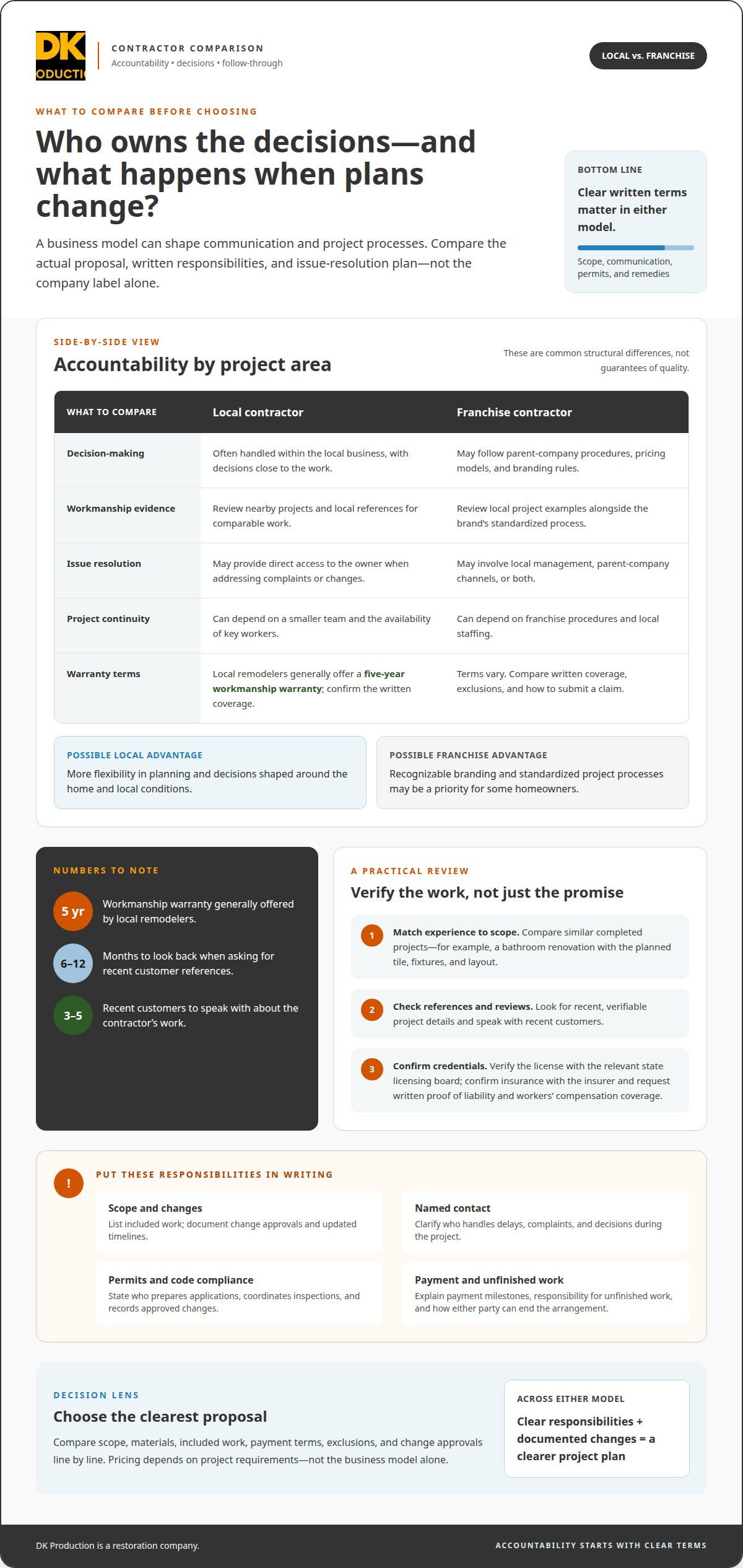
Accountability depends less on company size than on who manages decisions, documents changes, and addresses unfinished work. Before signing, compare the scope, examples of completed work, written terms, and plans for handling delays.
Workmanship and Relevant Experience
Reviewing past projects helps you assess workmanship and whether the contractor has handled a similar scope. For example, compare a completed bathroom renovation with the tile, fixtures, and layout planned for your home. Ask for references from the past 6-12 months, and look for recent Google reviews naming local customers and describing verifiable project details.
A local contractor may understand nearby suppliers, transportation, local conditions, and permitting processes. A franchise may follow standardized project steps while its local team completes the work. Compare the proposed scope, timeline, and examples of similar projects instead of assuming a brand or location guarantees quality.
Warranties and Issue Resolution
Local remodelers generally offer a five-year workmanship warranty; franchise warranty terms vary, so compare the written coverage, exclusions, and claim process. The warranty should clarify which work is covered and how a complaint is submitted. This makes it easier to understand what happens if a bathroom fixture or finish needs attention after completion.
For complaints, delays, and change orders, compare the named point of contact and how decisions are documented. A local owner may address an issue directly; a franchise may route it through local management or a parent company. In either model, written change approvals and updated timeline details help keep the scope and responsibilities clear.
Permits, Codes, and Credentials
The project agreement should state who is responsible for permits and code compliance. The contractor and homeowner can clarify who prepares applications, coordinates inspections, and records approved changes; requirements depend on the project and location. Put those responsibilities in writing before work begins, especially when structural changes affect the scope.
Verify a contractor’s license through the relevant state licensing board, and confirm insurance directly with the insurer. Request written proof of liability and workers’ compensation coverage, then speak with three to five recent customers. Those steps apply whether the business is independently owned or operates under franchise branding.
Risks of Small Local Contractors
A small team may have limited capacity if a key worker becomes unavailable or several projects overlap. That can affect scheduling and continuity, so review the project timeline and identify who manages the work if the lead contact is absent. Ask how the contractor will document progress and communicate schedule changes.
Project abandonment is another risk to address before signing. The agreement should explain payment milestones, responsibility for unfinished work, and how either party can end the arrangement. Direct access to a local business owner can be helpful, but it is not a substitute for an exit plan if the business stops operating.
Choose the proposal that clearly assigns the project scope, communication, permits, and remedies in writing.
Differences between local and franchise contractor business models
An independent contractor makes business decisions locally, while a franchise follows a parent company’s framework. That structure can shape pricing, project flexibility, crew assignments, and regional relationships.
Business Models and Franchise Royalties
Local contractors set business policies in-house and often rely on community reputation and word of mouth. Franchise owners operate under parent-company branding, rules, and pricing models, which can limit local flexibility.
Franchise royalty fees can affect pricing, but they are only one factor to consider. A locally owned remodeler avoids franchise royalties and may offer a fixed contract price, which can help keep pricing competitive; the fee structure alone doesn’t determine the quality or value of the work.
Regional knowledge can also shape decisions. A contractor familiar with nearby suppliers, transportation routes, local conditions, and permitting processes may plan material orders around the area. A franchise may follow a broader purchasing system with nationally approved suppliers.
Pricing and Contract Comparisons
Compare remodeling bids line by line, not by the total alone. Match each proposal’s labor, materials, preparation, project scope, and exclusions; then compare payment terms and the process for approving changes. This makes differences between a local contractor’s fixed-price agreement and a franchise proposal easier to understand.
For a general contractor managing a full-gut renovation, review who coordinates each phase and how work between trades is sequenced. The contract should describe included demolition, reconstruction, and finish work, along with how newly discovered conditions affect the scope. These details show what each bid covers.
Homeowners can also compare the written timeline, assigned project lead, and change-order process. Check whether a proposed change requires written approval before work proceeds, and how it affects the schedule and contract total. These specific terms matter more than a headline price when proposals describe different work.
Experience and Crew Continuity
Experience is most useful when it matches the project. A contractor who has completed similar kitchen layouts, bathroom updates, or whole-house projects can explain the work sequence and likely coordination needs. Compare that experience with the franchise team’s relevant local projects and the crew assigned to your home.
Crew continuity affects communication from demolition through the final finishes. Ask each contractor to identify the project lead, explain who supervises subcontractors, and describe how staff changes are handled. A franchise may use standardized procedures, while a local business may rely on a smaller, familiar crew.
Regional referral networks offer another point of comparison. Local contractors may work with nearby tradespeople whose reputations are known in the area. A referral can connect you with a past customer, but the project type and scope should still resemble your planned renovation.
To choose, match the scope and written terms first, then weigh local flexibility against franchise procedures and relevant team experience.
Are National Remodeling Companies a Bad Choice?
No, a national company can suit homeowners who value standardized processes or a faster, defined installation. A local custom remodeler may offer more flexibility, personalized communication, and attention to design choices; the difference depends on the project and the team doing the work.
Custom Design and Product Choices
Customization matters when a project needs to suit a particular room, routine, or style. For example, a bathroom plan may need to preserve storage while changing the shower layout. A local remodeler may adapt design choices around those priorities, while a national franchise may use more standardized options and procedures.
Product sourcing can also shape the experience. Local contractors may source from nearby suppliers, which can make communication about materials more direct. National franchises may use approved supplier networks, so product selections can follow a broader system. Ask how materials, delivery timing, and substitutions are reflected in the project plan.
Personalized Service and Project Communication
Project communication shows how much access homeowners have to the people making day-to-day decisions. An independent remodeler may offer direct contact with the owner or project lead, while a franchise may use established channels between its local team and parent company. Either approach can work when updates, decisions, and responsibilities are clear.
When evaluating a team, compare how it handles design feedback and questions. For example, ask how a requested cabinet adjustment is recorded and who explains its effect on the plan. A personalized process can keep choices aligned with your priorities; a standardized process can make repeat steps more predictable.
Local reputation often depends on community relationships. Owners who live and work nearby have a personal stake in how projects are discussed after completion, and regional suppliers or artisans may rely on repeat business. These relationships can encourage careful communication, but they don’t replace a clear work plan or written record of decisions.
Hands-on support is another potential local advantage. Independent remodelers often provide responsive customer service from the first consultation through the final walkthrough. For a minor post-installation adjustment, local contractors can usually send a technician within 48 hours. Compare that support with a franchise’s process for handling follow-up requests, rather than assuming national branding means poor service.
Estimates should explain how design choices translate into scope, materials, and installation steps. A local team may be able to adjust selections through direct discussion; a franchise may keep choices within established packages. Explore remodeling project options as you consider which approach fits your priorities.
Choose a national company if its standardized process suits your needs; consider a local remodeler if tailored design and direct communication matter more.
Local remodeler and franchise pricing
Neither a local remodeler nor a franchise is automatically more likely to add hidden fees. Compare the written estimates: look for itemized work, materials, allowances, exclusions, and the process for approving changes before signing.
A lower total can reflect a narrower scope, not better value. For example, one whole-house proposal might include demolition and debris removal, while another lists them separately. Compare the estimates for the same rooms, preparation, finish materials, installation tasks, and cleanup. Specific line items make differences easier to spot.
Ask how allowances work for products selected later, such as flooring or cabinetry. An estimate should show the allowance amount and explain how a selection above or below it changes the contract total. This helps you see whether the price includes the expected materials or leaves important choices open. Clear terms also prevent mistaking an allowance for a guaranteed final cost.
Local relationships with community suppliers may support flexible sourcing, while a franchise may use approved supplier networks. Either model can affect product availability, delivery coordination, and the choices included in an estimate. Compare specified products and the substitution process, not just the supplier’s location. A nearby source matters only if its materials meet the project requirements and agreed scope.
Payment terms and change orders deserve as much attention as the initial total. Check when payments are due, what work triggers each payment, and whether changes require written approval. If an unexpected condition changes the work, the agreement should explain how the revised scope, schedule, and cost will be documented. A written process is more useful than a verbal assurance.
A fixed contract price can make budgeting clearer when the scope and assumptions are detailed. It doesn’t automatically cover every change or hidden condition. Read exclusions closely, including work that depends on what crews discover after opening a wall. Distinguish specified repairs from additional work that requires separate approval.
Some franchises may charge for travel to and from a home. Look for travel, delivery, disposal, and other project-related line items in each estimate, and ask for unclear entries to be explained in writing. These costs should be visible before approval, not appear as an unexpected addition later.
Don’t treat a guarantee as a substitute for price clarity. A workmanship warranty addresses covered work after completion; it doesn’t explain allowances or added scope. Compare warranty terms separately from the estimate, and make sure the contract describes the total, payment schedule, exclusions, and change-order approval process.
For a steady comparison, mark each proposal as included, excluded, or unclear across the same scope. Then resolve unclear items before choosing; the best fit is the estimate that makes both cost and responsibilities understandable. Discuss your remodeling project and its priorities.
DK Production Restoration
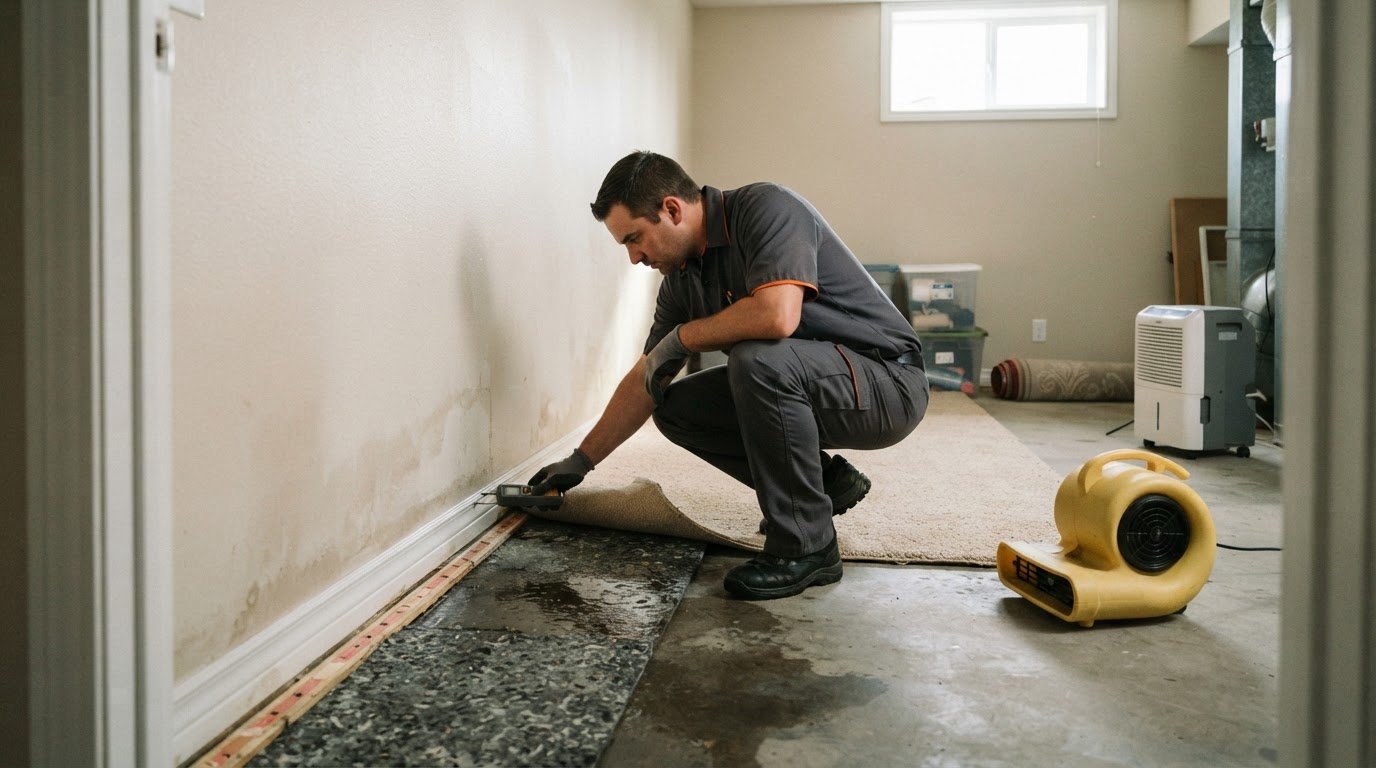
DK Production Restoration is a restoration company, a relevant next step when property damage calls for more than a standard remodeling comparison. If water damage affects your home, water mitigation, restoration, and reconstruction can help address the damage and rebuild affected areas. Consider the scope of work, written expectations, and communication process when deciding what support your situation needs. For a property affected by water damage, contact DK Production Restoration to discuss the restoration work your home requires.
Make the Next Step Work for Your Home
The right remodeling relationship should make clear who is responsible, how decisions move forward, and what happens if the project changes. Use those priorities to decide why you might choose a local remodeler over a franchise, then choose the team and agreement that best fit your home and expectations.
If property damage is part of the project, restore affected areas before planning further updates. DK Production handles water mitigation, restoration, and reconstruction to address water damage and rebuild affected parts of a home.
Share what happened and what you hope to restore, and take the next step with a clear understanding of the work ahead. Contact DK Production Restoration to discuss your property’s restoration needs. A thoughtful plan can make the path back to a comfortable home feel more manageable.
Frequently Asked Questions
Choosing a Contractor - Go Local or Big Name?
Choose the contractor whose project experience, communication approach, and written scope fit your priorities, rather than relying on brand size alone. For homeowners in Mukilteo, Marysville, Lake Stevens, Snohomish, Lynnwood, Mill Creek, Mountlake Terrace, Brier, Edmonds, Arlington, Woodway, Stanwood, Monroe, Granite Falls, Sultan, Gold Bar, Darrington, Index, or Bothel, DK Production Restoration is a restoration company serving local property needs. For remodeling, consider who will lead decisions and coordinate the work.
Are local contractors more cost-effective than national franchises?
Not automatically; ownership structure alone can’t establish which option will cost less for a particular project. A local contractor may make purchasing and operating decisions independently, while a franchise follows its parent company’s model. Those differences can affect how a proposal is assembled, but they don’t prove that one total will be lower. Compare the same project assumptions, product quality, and responsibilities before judging value.
Does Choosing a Family-Owned Remodeler Really Matter?
Family ownership may matter if you value direct access to the people who own and manage the business, but it alone doesn’t show how a project will go. Ask who can resolve design or scheduling decisions and whether that person stays involved through completion. A family-owned firm and a franchise can both have experienced teams; the practical difference is how decisions and responsibilities are organized.
How Can You Tell the Difference?
Look at how the business describes its ownership and who controls its operating model. An independent local contractor makes business decisions in-house; a franchise operates under a parent company’s brand and framework. A locally based team can still be part of a franchise, so a local address alone doesn’t establish independence. The agreement can also clarify which business entity is responsible for the work and project communications.
What are the benefits of hiring a local remodeler over a national franchise?
One reason to choose a local remodeler over a franchise is the chance to work with a team that makes decisions close to the project. That can help homeowners discuss priorities directly and adapt plans as work progresses. Local relationships may also connect a project with area businesses. These advantages depend on the contractor’s approach, so focus on how the team will work with your household.
How do local remodeler prices compare with franchise remodeling costs?
There is no single price relationship that applies to every local remodeler and franchise project. Costs depend on the work, selected materials, site conditions, and how each company structures its operations. A brand or local ownership label can’t replace a comparison of actual proposals. Before judging value, check whether each estimate covers the same desired result, product level, and project assumptions.


Comments