
Local Restoration Company or National Franchise: Which Responds Better

A national name doesn’t automatically mean a faster restoration response. For Lynnwood property owners, a local restoration company can be a local alternative to national restoration chains. The right fit depends on the damage, the services needed, and how quickly a crew can respond.
It’s reasonable to weigh a large franchise’s reach against a local company’s service scope, especially when water damage disrupts your home. This article compares how local companies and national franchises may differ in emergency response, capacity during widespread events, and restoration services, so you can assess what matters for your situation in Lynnwood.
DK Production Restoration provides residential water damage restoration, mitigation, and reconstruction. The comparison ahead explains where a local provider may fit, where a national network may have an advantage, and how to weigh the options without assuming size alone determines the outcome.
Table of Contents
Local Restoration Company vs National Franchise: Which Is Better?
Neither a corporate name nor a local address proves which company will respond faster or manage your loss better. Compare the arrival plan, crew capacity, written scope, credentials, and ability to coordinate restoration with your insurer.
Local and National Response Times
A nearby company may have less travel time, but that doesn’t establish crew availability. A national franchise may draw on resources from other regions during widespread events, while local firms have finite crews. Neither structure guarantees faster arrival in Lynnwood. Ask when the crew is expected and what communication to expect if plans change.
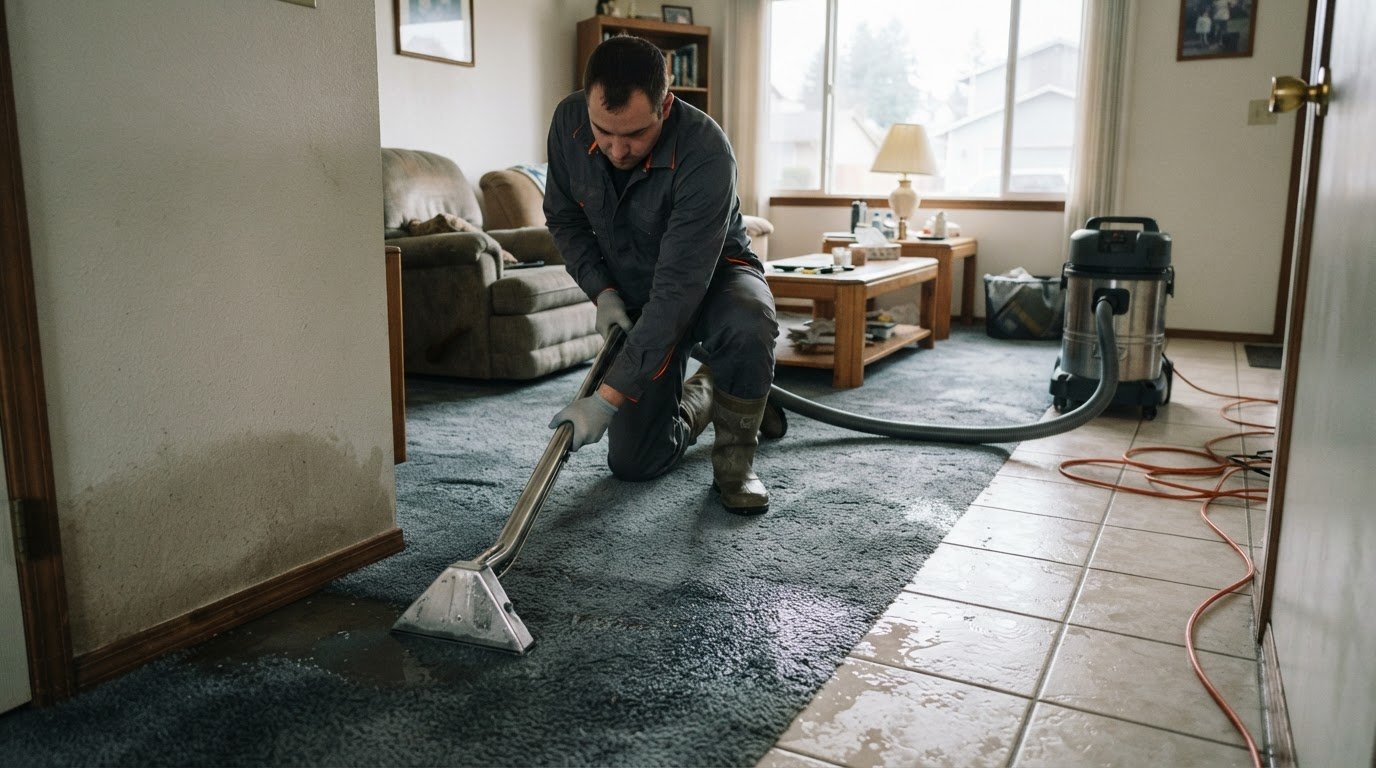
Timing can affect the work required: a crew arriving on day three may need to remove drywall and replace flooring rather than dry materials in place. Compare the company’s response plan, not simply its location or 24/7 claim.
Estimates and Contractor Questions
Compare estimates by scope, not just by the bottom line. Look for the described damage, mitigation steps, materials to be removed or dried, and how the estimate handles repairs after mitigation. Ask who will document the loss with photographs, scopes, and moisture readings for the insurance adjuster, and how changes will be recorded.
Ask who manages the work, which crew will attend, and what happens after the initial assessment. Some national chains have preferred-vendor agreements with large insurers that can simplify approval for large commercial losses. That doesn’t mean an insurer requires you to use its preferred vendor.
Credentials and Contractor Risks
A local label alone doesn’t establish a contractor’s qualifications. Ask what relevant credentials and insurance documentation the company can provide. An unqualified contractor may miss damage or perform incomplete mitigation; without insurance, responsibility for accidental damage can be harder to resolve.
Restoration companies can document damage for an adjuster, but hiring a particular company or involving it in a claim doesn’t guarantee payment. Ask how the company distinguishes its work scope from the insurer’s claim decision.
Reviews, References, and Reputation
When assessing reviews, look for specific accounts of communication, documentation, and completed restoration rather than relying on star ratings alone. Ask about projects involving similar water damage, then compare the work described and the company’s role from mitigation through repairs.
Local reputation can offer useful context about work in the area, while a national brand may have broader operating resources. If you’re looking for a local alternative to national restoration chains, judge the fit by relevant experience and the proposed work, not the label.
Choose the company whose written response plan, scope, and relevant credentials best match the damage and project needs.
Emergency response availability
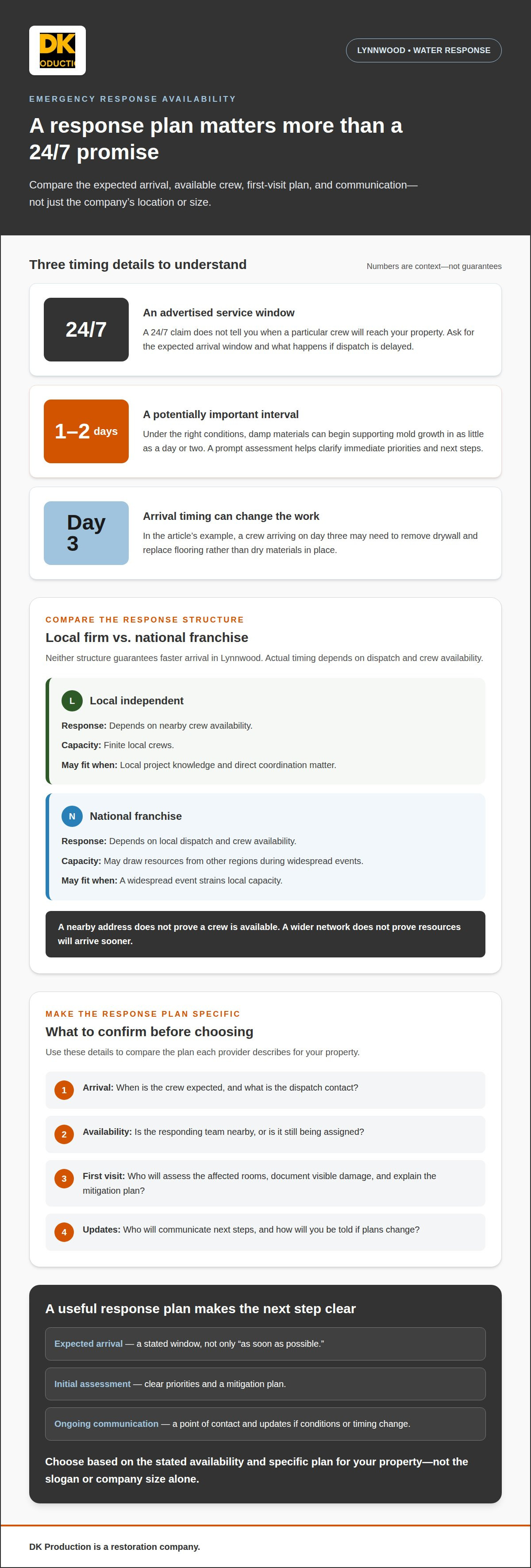
In a Lynnwood water emergency, response depends on more than a company’s address. Water can spread through wall cavities and flooring within hours, so dispatch timing, crew availability, and the initial assessment all shape what happens next. A nearby team may reduce travel, while a larger operation may have more resources to coordinate. Neither factor alone tells you when a crew will arrive.
A 24/7 service claim doesn’t guarantee immediate arrival. It describes an advertised service window, not the time a particular team reaches your property. Ask for a written arrival window, the dispatch contact, and what happens if the assigned crew is delayed. A clear answer helps you understand the actual emergency response rather than relying on a broad promise.
Availability can also change during regional emergencies. A local firm’s operations depend on its crews and equipment being available for nearby calls. A franchise may be able to coordinate resources from other states, but travel and competing incidents can affect when those resources reach Lynnwood. During a surge, ask whether the responding team is already nearby or still being assigned.
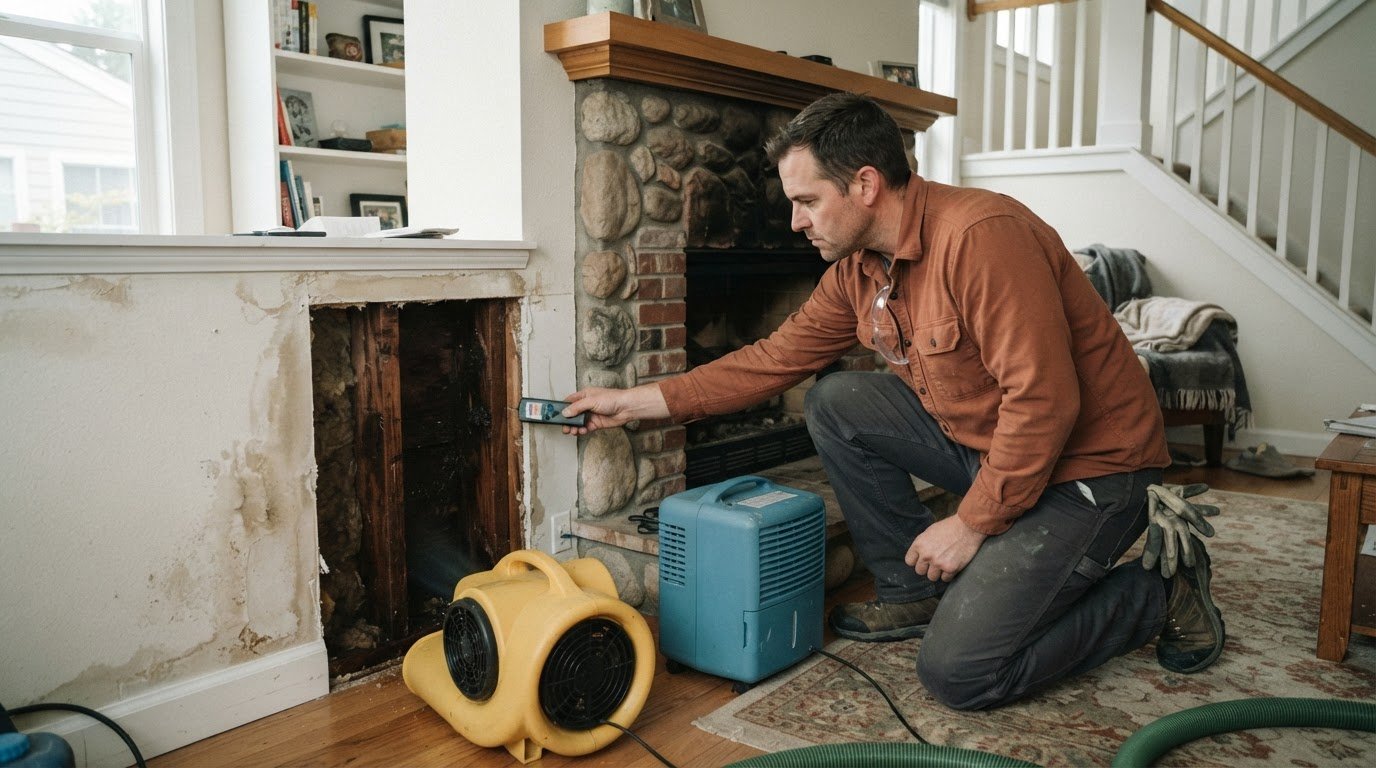
The first visit should establish immediate priorities and the next communication step. Ask who will assess the affected rooms, how visible damage will be documented, and who will explain the mitigation plan. These details matter because damp materials can begin supporting mold growth in as little as a day or two under the right conditions. A well-organized response should make clear who is responsible for each stage.
Compare providers using specific response details, not slogans. Ask when a crew can arrive, who will attend, what the initial visit covers, and how updates will be shared. A useful answer gives an expected window and a clear point of contact. If the response is only “as soon as possible,” you still don’t know the expected arrival or how the company will communicate if dispatch is delayed.
For a water loss, the most useful response plan links prompt assessment with documented next steps. The same plan should explain how the team will communicate findings and coordinate the work as conditions become clearer. A local company may offer direct familiarity with nearby operations, while a national chain may have a broader resource network. Judge each by its stated availability and specific plan for your property. To review the next steps, focus on who will respond and how the work will be coordinated.
Local firms’ strengths and capacity limitations
A local company can keep assessment, scheduling, and project communication close to a Lynnwood property. That may make it easier to speak with people familiar with the job instead of relaying updates through separate corporate operations. The practical benefit is continuity: one clear contact can explain who is assigned, what work is underway, and which decision comes next. Compare these details rather than assuming every local company works this way.
Capacity is the counterweight. A local company has finite crews, so several simultaneous water losses can compete for the same people and equipment. If a crew is already handling a large property loss, it may have less capacity for another project. A national chain may have a wider network to draw on, but additional resources still need coordination and travel before they can support local work.
The 2024 hurricanes Helene and Milton provide a recent example of that difference: national restoration franchises brought equipment and crews from other states after the storms. That demonstrates how a large network can add resources during a widespread event. It doesn’t establish that every franchise can send crews to Lynnwood quickly, or that local companies lack the ability to manage a particular job.
Center your comparison on the work plan and the people assigned. Ask how the company will staff the project, who will oversee coordination, and how it will handle a change in workload. A clear answer explains the staffing plan, the role of any incoming crew, and how responsibility for the job will remain organized. These details reveal more about usable capacity than advertised company size.
For a contained loss: Compare who will manage the work and communicate progress from assessment onward.
For multiple affected areas: Ask how the company will prioritize the work and assign crews across locations.
During a regional surge: Ask whether extra crews or equipment are available locally or must travel from elsewhere.
The trade-off is clear: a local firm may offer a nearby point of coordination, while a national network may have broader resources for widespread events. Neither scale alone proves faster service or better results. Match the company’s stated capacity to the size and complexity of your property loss, and weigh its actual project plan more heavily than its corporate reach. If you’re looking for a local alternative to national restoration chains, check whether the proposed team and resources fit the work ahead.
Published restoration services and local availability
A published service list helps Lynnwood homeowners understand what a restoration company handles, but doesn’t establish local availability. Separate the stated scope from the response plan: a company may describe mitigation, repairs, or reconstruction while its crews are committed elsewhere. Read each service description to understand the work covered, then compare it with the damage in your home.
To find reputable independent restoration companies near you, compare Lynnwood service information with project examples, references, and clear descriptions of completed work. Look for examples showing how the company moved from damage assessment through relevant restoration stages. A specific account of affected rooms and completed work gives more context than a broad claim of “full service.”
Published descriptions can also reveal where responsibility changes hands. For example, one provider might describe mitigation and another phase separately, while another explains how assessment, drying, and repairs connect. Ask for the actual scope for your property, including what is covered, what remains outside that scope, and who communicates changes. Clear boundaries help prevent misunderstandings during a stressful project.
Local availability needs its own evidence. A Lynnwood address or service-area statement shows geographic focus, not necessarily an available crew. Look for a clear dispatch process, a point of contact, and an explanation of how the company handles increased demand. A recent project example may show familiarity with nearby properties, but it doesn’t prove the same team is available for your loss.
Scope: Match the published service description to the damage and repair stages involved.
Local presence: Distinguish a stated service area from an actual crew assignment.
Accountability: Identify who oversees the work and communicates scope changes.
Documentation: Look for examples that explain the work performed, not just the finished result.
These steps make the comparison more useful than a franchise-versus-independent label. A local company may describe a focused range of work, while a national provider may publish broader service categories. Neither description alone shows who will handle the property, how each phase connects, or whether the stated scope matches the damage. A homeowner who needs both initial mitigation and later repairs, for example, needs a clear explanation of how those stages will be coordinated.
Before choosing, compare the written service scope with the proposed work plan and the named point of accountability. For a practical next step, review restoration project options and consider which published scope fits the property’s needs.
DK Production Restoration
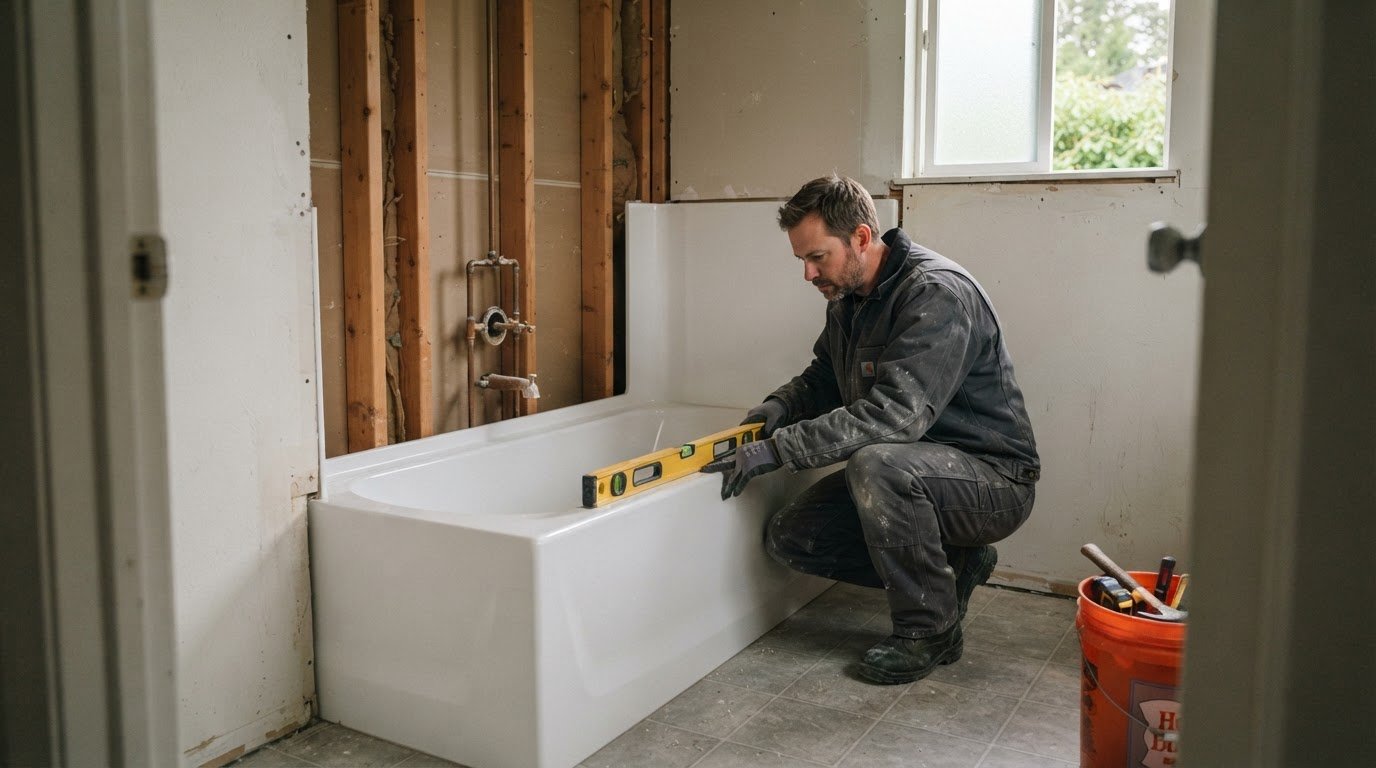
DK Production Restoration is a restoration company for homeowners weighing a local provider against a national chain. When water damage affects your home, its water mitigation, restoration, and reconstruction services connect the response to the work needed to bring the property back to its pre-loss condition. This can be a practical next step when you want one restoration company to address the damage and move the project forward.
As you weigh your options, focus on the work scope, communication, and how each stage will be handled. Clear coordination makes a difficult restoration process easier to follow.
Contact DK Production Restoration to discuss your property’s restoration needs.
Choose a Clear Path Forward
The right restoration partner is the one whose scope and communication fit your home, not simply the company with the largest network. If you’re considering a local alternative to national restoration chains, use your next conversation to clarify what happens after the initial assessment: who will coordinate the work, how updates will be shared, and how the plan can address the property’s needs as they become clearer.
DK Production provides water mitigation, restoration, and reconstruction for homeowners. These services support the move from damage assessment toward recovery and repair, with the work focused on restoring the property.
Bring your questions and describe the damage affecting your home. A straightforward discussion can help you understand the next step and decide how to move forward. Contact DK Production Restoration today to discuss your restoration needs.
Frequently Asked Questions
What should I ask before hiring a water damage restoration company?
Ask what the written scope includes, who manages each phase, and how changes are documented. For a Lynnwood home with water affecting several rooms, ask how the assessment distinguishes affected areas and how progress updates will reach you. Clarify whether the company communicates directly with your insurer and what information it needs from you. These answers help you understand how the project will be organized before work proceeds.
What local restoration companies serve my area?
DK Production Restoration serves Lynnwood and nearby communities, including Mukilteo, Marysville, Lake Stevens, Snohomish, Mill Creek, Mountlake Terrace, Brier, Edmonds, Arlington, Woodway, Stanwood, Monroe, Granite Falls, Sultan, Gold Bar, Darrington, Index, and Bothell. Its service area focuses on these specific communities as a trusted local alternative to national restoration chains. If your property is in one of these towns, DK Production Restoration’s local services may fit your needs.
Which services do local restoration companies offer compared with national chains?
Service offerings vary by provider, so compare the specific work described rather than assuming every company handles the same damage. DK Production Restoration’s restoration specialties include water damage, fire and smoke, and mold remediation. A local provider may focus on particular residential needs, while a national franchise may publish a broader service range. Match the company’s stated specialty to the type of damage and repair work your home needs.
How do local restoration companies compare with national restoration franchises on response time and availability?
Availability depends on the crews assigned to your location and their workload, not only on whether a company is local or national. A local team may already be nearby, while a franchise may coordinate support across regions. Compare the dispatch plan for your address, the expected arrival window, and how updates are communicated. A larger network doesn’t automatically mean an earlier arrival.
Do local restoration companies provide 24/7 emergency service?
Some do, but service hours differ by company. DK Production Restoration’s contact line is available 24 hours a day, 7 days a week, and 365 days a year. After a dispatch call, crews are stated to arrive within 60 minutes across the designated service area. That response detail applies to the stated communities, so consider whether your property falls within them when seeking urgent restoration assistance.
What questions should I ask before hiring a restoration company?
Ask how the company will keep decisions and project updates clear as work progresses. If an assessment identifies additional affected areas, ask how the revised scope will be explained and recorded before work changes. Also ask who your main contact will be and how completed work will be reviewed with you. These questions focus on communication and accountability throughout the project, not just the initial visit.
Comments